In today’s digital world, the need for confidentiality and data privacy has never been greater. With the increasing volume of sensitive information being shared and stored, organizations face the challenge of ensuring that this data is protected. One of the critical aspects of data protection is document redaction, where sensitive information is removed from documents before they are shared or published. Traditionally, redacting documents has been a time-consuming and manual process, but AI agents in document redaction are transforming how this task is approached. This article explores how AI agents are revolutionizing document redaction and why they are becoming indispensable tools in data privacy and security.
Understanding Document Redaction and Its Importance
Document redaction involves the process of removing or obscuring sensitive information from documents. This can include personally identifiable information (PII), financial data, trade secrets, or any other confidential material that should not be exposed to unauthorized individuals. Redacting documents properly is crucial for ensuring compliance with data protection regulations such as GDPR, HIPAA, and others.
Manual redaction can be highly prone to error, as it requires individuals to read through entire documents and identify sensitive information. It is a labor-intensive task that consumes significant time and resources, especially when dealing with large volumes of documents. In contrast, AI agents in document redaction can automate much of this process, making it faster, more accurate, and more efficient.
The Role of AI Agents in Document Redaction
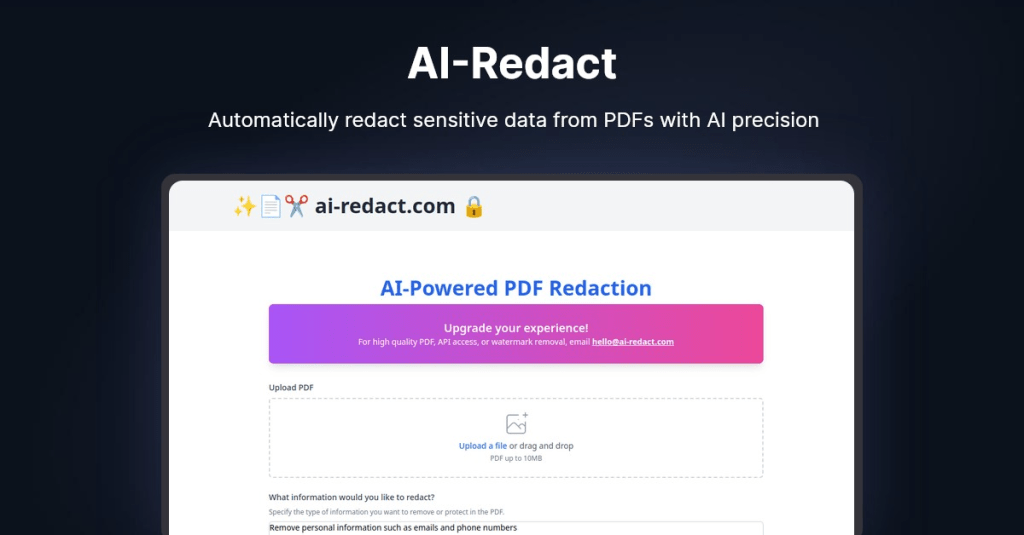
AI agents in document redaction use advanced machine learning and natural language processing (NLP) techniques to automatically identify and redact sensitive information. These AI agents are trained to understand the context of the document and recognize patterns that indicate sensitive data. This could include names, addresses, credit card numbers, social security numbers, confidential business information, and other forms of private data.
By using AI agents in document redaction, organizations can significantly reduce the risk of human error, which can lead to data breaches or legal issues. AI can quickly scan through vast amounts of data, ensuring that no sensitive information is missed or accidentally exposed. Furthermore, AI agents can work 24/7 without the fatigue or limitations of human workers, providing continuous, efficient redaction capabilities.
Key Benefits of Using AI Agents in Document Redaction
- Speed and Efficiency
One of the most significant advantages of using AI agents in document redaction is the speed at which they can process documents. Traditional manual redaction can take hours or even days, depending on the volume and complexity of the documents. AI agents can analyze and redact documents much faster, freeing up time for other critical tasks.
This is particularly beneficial for organizations that deal with large volumes of documents, such as legal firms, healthcare providers, and government agencies. By automating the redaction process, these organizations can ensure that sensitive information is removed promptly, without the risk of delayed compliance.
- Accuracy and Precision
AI agents in document redaction can be highly accurate in identifying sensitive information, even in complex or unstructured documents. Unlike humans, AI does not get fatigued or distracted, meaning that it can consistently deliver high-quality results. AI-powered redaction tools are also capable of learning and improving over time, ensuring that they continue to evolve and enhance their redaction capabilities.
By leveraging AI’s ability to analyze the context and language of documents, the risk of missing sensitive information or over-redacting is minimized. This is crucial for ensuring that documents are safe to share while maintaining their integrity.
- Cost Savings
Automating the document redaction process with AI agents can lead to significant cost savings for organizations. Manual redaction often requires a team of trained personnel, which can be costly and resource-intensive. By using AI-powered tools, organizations can reduce their reliance on human workers and minimize operational expenses. AI agents can perform redactions quickly and accurately, reducing the need for extensive labor and human oversight.
- Scalability
As organizations grow, so does the volume of documents they need to process. AI agents in document redaction can easily scale to handle increasing workloads without the need for additional resources. Whether a company needs to redact a few documents or thousands, AI can adapt and perform consistently at scale.
For example, legal firms that manage thousands of legal documents can rely on AI to ensure that every piece of sensitive information is removed before sharing or submission. Similarly, healthcare organizations can use AI agents to redact medical records to comply with privacy regulations such as HIPAA.
- Enhanced Compliance
With the growing number of privacy regulations and data protection laws, organizations must ensure compliance with a variety of standards. Failure to redact sensitive information properly can lead to legal penalties and damage to a company’s reputation. AI agents in document redaction help organizations adhere to these regulations by ensuring that sensitive data is appropriately handled.
By using AI for redaction, companies can quickly align their processes with the latest regulatory requirements. AI-powered tools can be updated to reflect changes in the law, ensuring that redaction practices remain compliant without the need for constant manual oversight.
How AI Agents Learn to Redact Documents
AI agents in document redaction are powered by machine learning and natural language processing algorithms. These technologies enable AI to recognize patterns in text and understand the context of a document. For example, an AI agent may be trained to recognize specific types of personal data, such as names or phone numbers, by analyzing vast amounts of labeled data.
AI agents can also be trained using supervised learning, where human experts provide feedback to the system about the accuracy of the redactions. Over time, the AI improves its ability to identify and redact sensitive information, making it more effective as it is used.
Furthermore, AI agents can be integrated with optical character recognition (OCR) technology, allowing them to process scanned documents and images. This is particularly useful for organizations that deal with physical documents that need to be digitized and redacted.
Conclusion
AI agents in document redaction are transforming the way organizations manage and protect sensitive information. By leveraging the power of AI, companies can automate the redaction process, ensuring accuracy, efficiency, and compliance with data protection regulations. The benefits of using AI agents in document redaction are clear: speed, precision, cost savings, scalability, and enhanced compliance.
As the volume of data continues to grow, AI agents will play an increasingly important role in helping organizations manage the redaction process. Whether you’re in healthcare, legal, finance, or any other industry that deals with sensitive information, AI-powered redaction is becoming a critical tool for maintaining privacy and security in the digital age.
 Tech blog
Leave a comment