Introduction: The Role of AI Agents in Content Creation
In today’s fast-paced digital world, the demand for high-quality content is greater than ever. As businesses, creators, and marketers strive to capture the attention of online audiences, the need for innovative tools to streamline content production has never been more critical. One such advancement is the use of AI agents in content creation. These intelligent systems have revolutionized how content is generated, offering benefits like speed, efficiency, and scalability. In this article, we explore the rise of AI agents in content creation, their benefits, challenges, and the future potential of this technology.
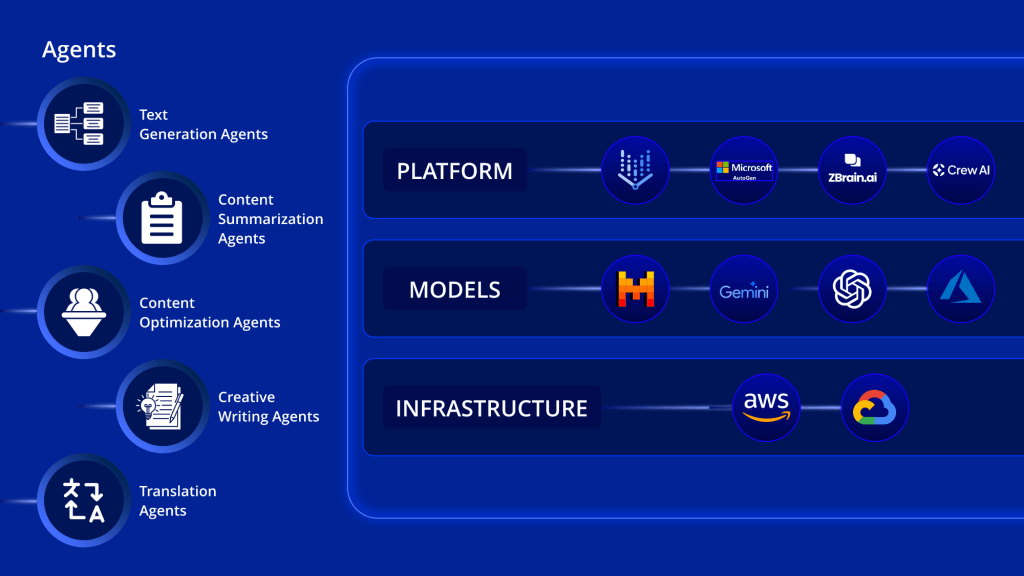
What Are AI Agents in Content Creation?
AI agents in content creation refer to advanced software programs powered by artificial intelligence (AI) that assist in generating text, images, videos, and other forms of content. These agents use machine learning algorithms and natural language processing to understand context, analyze data, and produce content that resonates with human audiences. Unlike traditional content creation methods, AI agents are capable of working autonomously, often producing content in a fraction of the time it would take a human creator.
How AI Agents Are Transforming Content Creation
AI agents have brought about a significant transformation in the way content is created. Here are some of the key ways in which these tools are shaping the content creation landscape:
- Efficiency and Speed
One of the primary advantages of AI agents in content creation is their ability to generate high-quality content at a much faster rate than human writers or creators. Whether it’s drafting articles, creating social media posts, or generating video scripts, AI can quickly produce content that meets the desired criteria. This allows creators to focus on other important aspects of their projects, such as strategy and engagement, while leaving the content generation to AI.
- Consistency and Scalability
AI agents excel at maintaining consistency in content output, which is especially beneficial for businesses that need to produce large volumes of content regularly. Whether it’s blog posts, product descriptions, or email marketing campaigns, AI can produce content in a consistent voice, tone, and style. Additionally, the scalability of AI agents enables businesses to generate content across multiple channels without sacrificing quality.
- Cost-Effectiveness
Hiring a team of writers, designers, or videographers can be expensive. AI agents in content creation provide a cost-effective alternative by reducing the need for large content teams. With AI-powered tools, businesses can cut down on labor costs while still maintaining a high level of productivity and creativity in their content production.
- Personalization and Targeting
AI agents are also able to analyze large amounts of data and audience behavior, making it possible to create content that is highly personalized and targeted. By leveraging this data, AI can tailor content to specific audience segments, ensuring that the right message reaches the right people at the right time. This personalized approach can lead to higher engagement rates and better overall content performance.
Challenges of AI Agents in Content Creation
While AI agents bring numerous benefits to content creation, there are also challenges associated with their use. Understanding these challenges is important for maximizing the potential of AI in this space.
- Quality Control
Despite their ability to generate content quickly, AI agents still face limitations when it comes to producing content that is as nuanced and creative as human-generated work. While AI can produce grammatically correct and well-structured content, it may struggle with capturing the emotional depth, creativity, and unique voice that human writers bring. This means that human oversight is often needed to ensure the content meets the desired quality standards.
- Ethical Concerns and Authenticity
The rise of AI agents in content creation raises questions about the authenticity of content. With AI generating articles, blog posts, and even social media content, there is a concern that audiences may feel deceived by machine-produced content. Additionally, ethical issues may arise around plagiarism, as AI can sometimes generate content that closely resembles existing work found on the web.
- Dependence on Technology
Relying too heavily on AI agents for content creation can lead to a loss of creativity and innovation in the process. While AI is a powerful tool, it cannot replicate human intuition, emotional intelligence, or the ability to think outside the box. Overdependence on AI for content creation may result in formulaic, predictable content that lacks originality.
The Future of AI Agents in Content Creation
The future of AI agents in content creation looks promising, with technology continuing to evolve at a rapid pace. As AI becomes more sophisticated, we can expect even more advanced features, such as improved emotional intelligence, better understanding of context, and more human-like writing abilities. These advancements will likely lead to greater collaboration between human creators and AI, combining the strengths of both to produce even more engaging, personalized, and high-quality content.
Conclusion: Embracing the Power of AI Agents in Content Creation
AI agents in content creation have already begun to reshape the digital landscape, offering efficiency, scalability, and personalization like never before. While challenges remain, the potential benefits of using AI in content production are vast, making it an invaluable tool for businesses, marketers, and creators alike. As AI technology continues to improve, the collaboration between human creativity and machine intelligence will only grow stronger, ensuring that content creation remains innovative, relevant, and accessible for years to come.
Incorporating AI agents in content creation is no longer a futuristic concept—it’s a current reality. By leveraging these tools, creators can produce high-quality content at scale, meet the demands of modern audiences, and stay ahead of the competition. The key to success lies in finding the right balance between automation and human input, ensuring that AI agents complement rather than replace the human touch in content creation.
 Tech blog
Leave a comment