The rise of large language models (LLMs) has transformed the landscape of artificial intelligence, enabling developers to create innovative applications that enhance productivity and streamline processes. In this article, we will explore LLM applications development, focusing on its significance, key components, and practical applications across various industries.
What Are Large Language Models?
Large language models are advanced artificial intelligence systems that can understand, generate, and manipulate human language. These models, powered by deep learning algorithms and vast datasets, are designed to comprehend context, semantics, and grammar. This capability makes LLMs particularly useful for various applications, including text generation, translation, summarization, and more.
The Importance of LLM Applications Development
The development of LLM applications has become crucial in today’s data-driven world. Organizations are increasingly relying on these applications to improve efficiency, enhance user experiences, and gain insights from unstructured data. Some key reasons for the significance of LLM applications development include:
- Enhanced Automation: LLMs can automate repetitive tasks such as customer support, content creation, and data analysis. This automation allows businesses to save time and resources, enabling employees to focus on higher-value activities.
- Improved Decision-Making: By analyzing large volumes of data and providing actionable insights, LLM applications assist organizations in making informed decisions. This capability is particularly beneficial in fields like finance, healthcare, and marketing.
- Personalized User Experiences: LLMs can analyze user preferences and behaviors, allowing for personalized interactions. This personalization improves customer satisfaction and loyalty, driving business success.
- Scalability: LLM applications can easily scale to handle increasing data volumes and user interactions, making them suitable for businesses of all sizes.
Key Components of LLM Applications Development
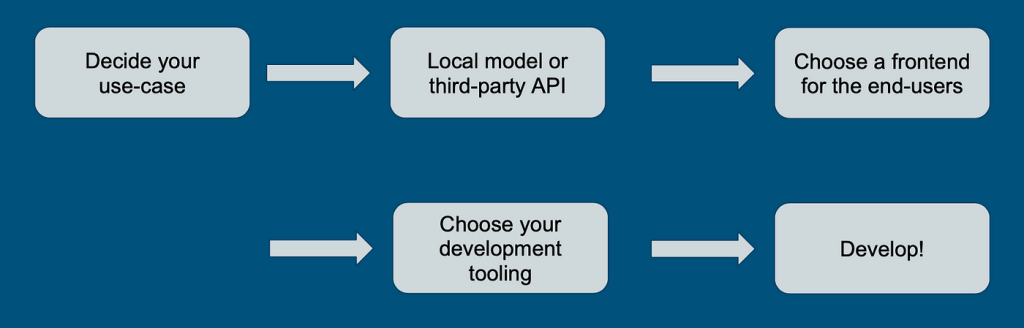
To effectively develop LLM applications, developers need to understand several key components:
1. Data Collection and Preparation
The first step in LLM applications development is gathering relevant data. This data can come from various sources, including social media, customer interactions, and internal documents. Once collected, the data must be cleaned, preprocessed, and formatted to ensure the LLM can effectively analyze it.
2. Model Selection
Selecting the right language model is critical in LLM applications development. Developers must choose a model that aligns with their specific use case, whether it’s for natural language processing (NLP), text generation, or sentiment analysis. Factors such as model size, training data, and performance should be considered during this selection process.
3. Fine-Tuning the Model
After selecting a suitable model, developers often need to fine-tune it using domain-specific data. This process enhances the model’s performance by training it on relevant examples, allowing it to better understand the context and terminology specific to the industry.
4. Building the Application
Once the model is fine-tuned, the next step is building the application. This phase involves designing the user interface, integrating APIs, and ensuring that the application can effectively communicate with the LLM. Developers must also consider the application’s scalability and security features during this stage.
5. Testing and Evaluation
Testing is a critical aspect of LLM applications development. Developers must evaluate the application’s performance, accuracy, and usability. This phase may involve user testing, A/B testing, and collecting feedback to identify areas for improvement.
6. Deployment and Maintenance
After thorough testing, the application is ready for deployment. However, the development process doesn’t end here. Continuous monitoring and maintenance are essential to ensure the application remains up-to-date, secure, and effective. This includes regularly updating the underlying model and addressing any emerging issues.
Practical Applications of LLM Development
LLM applications development has numerous practical applications across various sectors. Some notable examples include:
1. Customer Support
Many businesses utilize LLM applications to power chatbots and virtual assistants. These tools can provide instant responses to customer inquiries, improving customer service while reducing the workload on human agents.
2. Content Generation
LLMs can generate high-quality content for blogs, social media, and marketing materials. By automating content creation, businesses can maintain a consistent online presence without sacrificing quality.
3. Language Translation
LLM applications development has significantly advanced language translation services. These applications can provide accurate translations in real-time, facilitating communication between individuals who speak different languages.
4. Sentiment Analysis
Businesses can use LLMs to analyze customer feedback and social media interactions. This sentiment analysis helps organizations understand public perception, enabling them to address concerns and improve their products or services.
5. Educational Tools
LLMs are being used to create personalized learning experiences. Educational platforms can leverage these applications to tailor content to individual student needs, helping them grasp complex concepts more effectively.
Conclusion
LLM applications development represents a significant advancement in the field of artificial intelligence, offering a wide range of benefits across various industries. By understanding the key components of LLM applications development and their practical applications, organizations can harness the power of large language models to enhance efficiency, improve user experiences, and drive innovation. As technology continues to evolve, the potential for LLM applications development will only grow, making it an exciting area for developers and businesses alike.
 Tech blog
Leave a comment