Introduction
In today’s rapidly evolving digital landscape, generative AI is transforming various industries, and internal audit is no exception. As businesses become more data-driven, the demand for efficient, accurate, and forward-thinking auditing processes is rising. Generative AI for internal audit offers immense potential to streamline workflows, enhance accuracy, and improve decision-making.
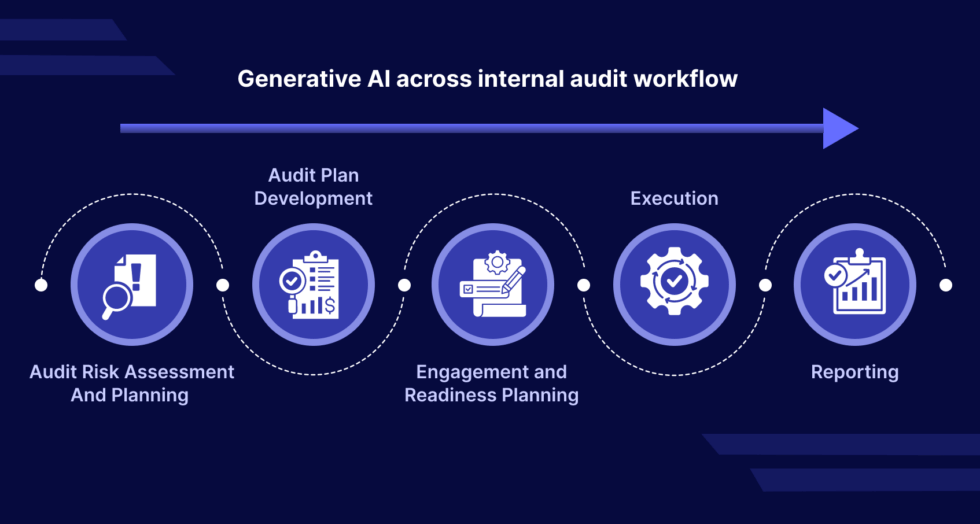
What is Generative AI and How Does It Relate to Internal Audit?
Generative AI refers to artificial intelligence technologies capable of creating new data, text, images, or even models based on input data. While often associated with creative fields like art and content creation, its application in internal audit has proven to be just as impactful. Generative AI for internal audit goes beyond automating routine tasks. It provides auditors with deeper insights by generating predictive models and offering real-time data analysis.
Internal audit teams handle vast amounts of data, and using generative AI can help automate data collection, highlight anomalies, and uncover hidden patterns that would otherwise be missed. This makes internal audit more proactive, efficient, and precise.
Automating Routine Audit Tasks
One of the most significant benefits of generative AI for internal audit is the automation of repetitive tasks. Traditional internal audits often involve manual processes like data entry, document verification, and sample selection, which are time-consuming and prone to human error. By leveraging generative AI, auditors can automate these processes, reducing the time spent on routine tasks and minimizing errors.
For example, generative AI can automatically pull data from various sources, cleanse it, and generate reports without the need for manual intervention. This allows auditors to focus on higher-value activities, such as risk assessment and control evaluation.
Enhanced Data Analysis and Pattern Recognition
Generative AI for internal audit plays a crucial role in enhancing data analysis. Traditional audit methods involve sampling a portion of transactions or data points, which may not always give a complete picture. With generative AI, auditors can analyze entire datasets, identifying patterns, trends, and outliers that were previously undetectable.
For instance, in financial audits, generative AI can assess thousands of transactions in real-time, flagging suspicious activities or irregularities. By analyzing vast datasets, generative AI allows auditors to detect anomalies faster and with greater accuracy. This advanced pattern recognition can significantly reduce the time required to conduct audits while increasing the reliability of findings.
Predictive Analytics and Risk Identification
Another area where generative AI for internal audit is making strides is in predictive analytics. Instead of merely examining historical data, generative AI can predict potential risks or areas of concern based on current trends. This proactive approach to auditing allows businesses to address potential issues before they become significant problems.
By applying predictive models, generative AI can help internal auditors forecast financial risks, identify operational inefficiencies, and anticipate compliance issues. This shifts the audit function from being reactive to being proactive, empowering organizations to make informed decisions with foresight.
Improving Compliance and Governance
Compliance is a critical aspect of internal audit, especially in highly regulated industries. Generative AI for internal audit enhances compliance management by continuously monitoring regulations, industry standards, and internal policies. Auditors can leverage AI-driven tools to ensure that their organizations remain compliant with the latest regulations and avoid costly penalties.
Generative AI can also track changes in regulatory frameworks and automatically update internal audit checklists and protocols, ensuring audits remain relevant and up-to-date. This not only improves governance but also ensures a seamless transition to new compliance requirements, reducing the likelihood of oversight.
Real-Time Reporting and Insights
One of the most remarkable advantages of using generative AI for internal audit is the ability to generate real-time reports. Traditional audits often result in periodic reports, which may leave gaps in oversight between reporting periods. With generative AI, auditors can access up-to-the-minute insights, allowing them to respond swiftly to emerging risks or issues.
Generative AI tools can consolidate data from multiple sources, process it instantly, and present findings in clear, comprehensible formats. This real-time reporting gives internal auditors the ability to make timely recommendations and help organizations address potential problems before they escalate.
Ethical Considerations and Challenges
While generative AI for internal audit offers many benefits, it also raises ethical considerations and challenges. As AI technologies become more integrated into audit processes, there are concerns regarding data privacy, transparency, and accountability. Organizations must ensure that AI systems are designed and deployed responsibly, with safeguards in place to prevent misuse.
Additionally, while generative AI can automate many audit tasks, the human element remains crucial. AI should be viewed as a tool to augment, rather than replace, human judgment. Auditors must still apply their expertise in interpreting AI-generated insights and making informed decisions.
Training and Skill Development for Auditors
To fully leverage the power of generative AI for internal audit, organizations must invest in training and upskilling their internal audit teams. Auditors need to develop a strong understanding of AI technologies, data analysis techniques, and the ethical implications of AI use. By equipping auditors with the skills needed to work alongside AI systems, organizations can ensure the successful integration of these technologies into their internal audit functions.
Moreover, auditors will need to learn how to interpret AI-driven insights and how to adjust their strategies to focus on more complex, high-value tasks. This shift in skill sets will empower internal auditors to provide even greater value to their organizations.
Conclusion
Generative AI for internal audit is revolutionizing how organizations approach auditing processes. From automating routine tasks to providing advanced data analysis, predictive modeling, and real-time reporting, generative AI is enhancing the efficiency, accuracy, and scope of internal audits. By adopting these technologies, organizations can stay ahead of risks, improve compliance, and drive better business outcomes.
While the implementation of generative AI comes with challenges, such as ethical considerations and the need for skill development, its potential to transform internal audit functions is undeniable. As organizations continue to embrace digital transformation, generative AI will play a central role in shaping the future of internal auditing.
 Tech blog
Leave a comment