Introduction
In the fast-paced world of technology, businesses are constantly seeking innovative ways to enhance their operations. One of the most significant advancements in recent years is the development of artificial intelligence (AI) systems that leverage retrieval-augmented generation (RAG). This approach combines the strengths of traditional retrieval-based methods with generative AI, creating a more robust solution for enterprises. This article will explore how accelerating enterprise AI development with retrieval-augmented generation can transform business processes, improve decision-making, and drive competitive advantages.
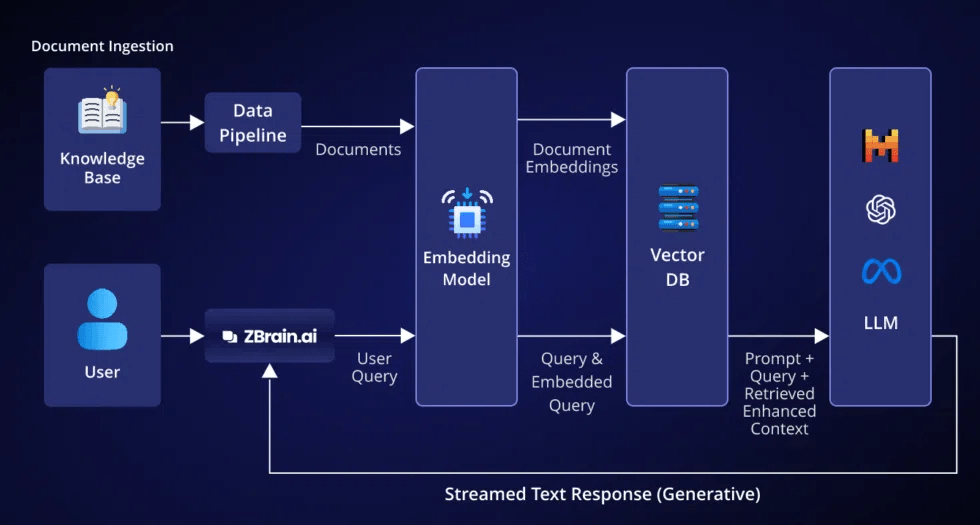
Understanding Retrieval-augmented Generation
Retrieval-augmented generation is an AI framework that combines two primary techniques: information retrieval and text generation. Traditional information retrieval systems pull relevant information from large datasets or databases, while generative models create new content based on learned patterns and structures. By merging these two methodologies, organizations can develop AI systems that not only access and provide accurate information but also generate contextual responses that are coherent and relevant.
The core idea behind retrieval-augmented generation is to enhance the generative capabilities of AI models by incorporating real-time data retrieval. This allows the AI to provide responses that are not only accurate but also up-to-date, making it particularly useful for dynamic environments where information changes rapidly.
Benefits of Retrieval-augmented Generation for Enterprises
Enhanced Accuracy and Relevance
One of the most compelling reasons for accelerating enterprise AI development with retrieval-augmented generation is the increased accuracy and relevance of the generated content. By integrating real-time data retrieval, businesses can ensure that the information presented by their AI systems is not only accurate but also reflective of the latest trends and developments. This is crucial for organizations that operate in industries where timely information is vital for decision-making.
Improved Decision-Making
Organizations often face challenges in making informed decisions due to the overwhelming amount of data available. Retrieval-augmented generation can help streamline this process by quickly retrieving relevant information and generating comprehensive insights. By providing executives and managers with timely and contextually relevant information, businesses can make data-driven decisions more effectively. This capability can lead to improved operational efficiency and a more agile response to market changes.
Personalized Customer Experiences
In today’s competitive landscape, providing personalized customer experiences is essential for businesses. Retrieval-augmented generation enables organizations to better understand customer preferences and behaviors by analyzing vast amounts of data. AI systems can retrieve relevant information about individual customers and generate tailored responses, thereby enhancing customer interactions. This level of personalization can lead to increased customer satisfaction and loyalty.
Cost-Effectiveness
Investing in AI technologies can be costly, but retrieval-augmented generation offers a more cost-effective solution. By leveraging existing data sources and enhancing them with generative capabilities, organizations can reduce the need for extensive manual input and traditional content creation methods. This not only saves time and resources but also allows companies to allocate their budgets more effectively, investing in other areas of growth.
Implementation Strategies for Enterprises
Identify Use Cases
To successfully implement retrieval-augmented generation, enterprises should start by identifying specific use cases where this technology can add value. This may include customer support, market research, content creation, or any area where timely and accurate information is critical. By focusing on high-impact use cases, organizations can maximize the benefits of their AI investments.
Invest in Data Infrastructure
A robust data infrastructure is essential for accelerating enterprise AI development with retrieval-augmented generation. Organizations should invest in data management systems that can efficiently store and retrieve large datasets. Ensuring that data is organized, easily accessible, and up-to-date will enable AI systems to function optimally and provide accurate information.
Foster a Culture of Innovation
To fully leverage the potential of retrieval-augmented generation, businesses must foster a culture of innovation. Encouraging collaboration among different teams, including IT, data science, and business operations, can lead to the development of more effective AI solutions. Organizations should also invest in training and upskilling their workforce to ensure they have the necessary expertise to implement and manage these advanced technologies.
Monitor and Evaluate Performance
Finally, organizations should continuously monitor and evaluate the performance of their retrieval-augmented generation systems. This involves tracking metrics such as accuracy, response times, and user satisfaction. By regularly assessing performance, businesses can identify areas for improvement and make necessary adjustments to enhance the effectiveness of their AI solutions.
Conclusion
Accelerating enterprise AI development with retrieval-augmented generation presents a unique opportunity for businesses to enhance their operations, improve decision-making, and deliver personalized customer experiences. By integrating retrieval and generative capabilities, organizations can leverage real-time data to provide accurate, relevant, and timely information. As companies increasingly recognize the value of these advanced technologies, the adoption of retrieval-augmented generation is likely to become a key driver of success in the ever-evolving business landscape. Embracing this innovative approach will enable enterprises to stay competitive and agile in a world where information is constantly changing.
 Tech blog
Leave a comment