Introduction
In today’s fast-paced financial landscape, investors are continually seeking ways to enhance their portfolio management strategies. Artificial intelligence has emerged as a transformative force, offering powerful tools that enable more informed decision-making and risk management. This article explores the concept of AI for portfolio management, its benefits, and how it is reshaping the investment landscape.
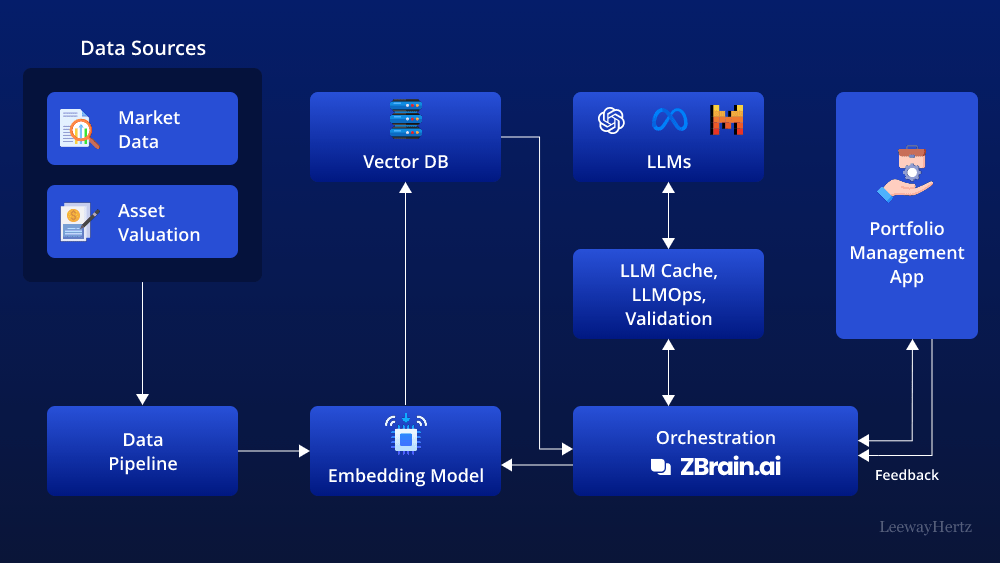
Understanding AI for Portfolio Management
AI for portfolio management refers to the use of artificial intelligence techniques to optimize investment strategies, analyze market trends, and manage risks. This technology leverages advanced algorithms, machine learning, and data analytics to process vast amounts of information and generate insights that would be impossible for human analysts to achieve in a timely manner.
Investors utilize AI tools to automate various aspects of portfolio management, from asset allocation to performance monitoring. By harnessing data from multiple sources, AI can identify patterns and trends, enabling investors to make more accurate predictions about market movements and potential investment opportunities.
The Advantages of AI in Portfolio Management
Enhanced Decision-Making
One of the primary advantages of AI for portfolio management is its ability to enhance decision-making. Traditional investment strategies often rely on historical data and human intuition, which can be limited and biased. AI, on the other hand, processes vast datasets and provides data-driven insights that help investors make more informed choices.
For example, machine learning algorithms can analyze historical price movements, economic indicators, and even social media sentiment to forecast market trends. This capability allows investors to react quickly to changing conditions, optimizing their portfolios in real time.
Improved Risk Management
Risk management is a critical component of successful portfolio management. AI tools can assess the risk associated with various investment options, helping investors understand potential vulnerabilities in their portfolios. By employing predictive analytics, AI can identify potential market downturns or shifts in economic conditions, allowing investors to adjust their strategies proactively.
Furthermore, AI for portfolio management can facilitate stress testing, simulating various market scenarios to evaluate how a portfolio would perform under different conditions. This capability helps investors make more robust decisions and safeguard their investments against unforeseen challenges.
Portfolio Diversification
Diversification is a fundamental principle of portfolio management, and AI can significantly enhance this process. By analyzing historical data and market correlations, AI can suggest optimal asset allocations that minimize risk while maximizing returns. This ensures that investors are not overly exposed to any single asset or market segment.
AI systems can also monitor asset performance in real time, automatically rebalancing portfolios as needed to maintain diversification. This dynamic approach enables investors to adapt to changing market conditions without having to manually adjust their portfolios.
Implementation of AI for Portfolio Management
Data Collection and Analysis
The effectiveness of AI for portfolio management hinges on the quality of data collected. Investors must gather data from diverse sources, including historical prices, economic indicators, and alternative datasets such as social media sentiment and news articles. This comprehensive data collection is crucial for training AI algorithms to produce accurate predictions.
Once the data is collected, machine learning algorithms analyze it to identify trends and relationships that may not be immediately apparent. This analytical process is fundamental to the AI’s ability to generate actionable insights for portfolio management.
Continuous Learning and Adaptation
AI systems excel at learning from new data and adapting to changing market conditions. By employing machine learning techniques, these systems can continuously improve their performance over time. This adaptability is particularly valuable in the unpredictable world of finance, where market dynamics can shift rapidly.
As new data becomes available, AI algorithms can refine their models and predictions, ensuring that investors always have access to the most up-to-date insights. This continuous learning process enhances the overall effectiveness of AI for portfolio management.
Integration with Existing Systems
To fully leverage the benefits of AI for portfolio management, investors need to integrate AI tools with their existing systems. This may involve collaborating with technology providers or developing in-house solutions tailored to specific investment strategies.
Integration allows for seamless data sharing and workflow automation, enhancing operational efficiency. As a result, investors can focus more on strategic decision-making rather than getting bogged down in manual processes.
Challenges and Considerations
Data Privacy and Security
As with any technology, the use of AI for portfolio management raises concerns about data privacy and security. Investors must ensure that their data is protected and that they comply with relevant regulations. Implementing robust cybersecurity measures is essential to safeguard sensitive information.
Overreliance on Technology
While AI offers significant advantages, there is a risk of overreliance on technology. Investors must strike a balance between using AI insights and applying their judgment. Human expertise remains invaluable, particularly when interpreting complex market signals and making nuanced decisions.
Market Volatility
The financial markets are inherently volatile, and AI models can sometimes struggle to adapt to sudden changes. Investors should remain vigilant and monitor their portfolios regularly to ensure that AI-generated recommendations align with their overall investment goals.
Conclusion
AI for portfolio management represents a paradigm shift in how investors approach asset allocation, risk management, and decision-making. By harnessing the power of artificial intelligence, investors can enhance their strategies, improve performance, and navigate the complexities of the financial markets more effectively.
As technology continues to evolve, the integration of AI into portfolio management will likely become even more sophisticated, offering investors new opportunities to optimize their investment approaches. Embracing this technology can empower investors to stay ahead in a competitive landscape, making informed choices that align with their financial objectives.
 Tech blog
Leave a comment