Generative AI is revolutionizing various industries by enabling machines to create content, automate processes, and enhance decision-making. This article explores the use cases and applications of generative AI, providing insight into its solutions and implementation strategies.
What is Generative AI?
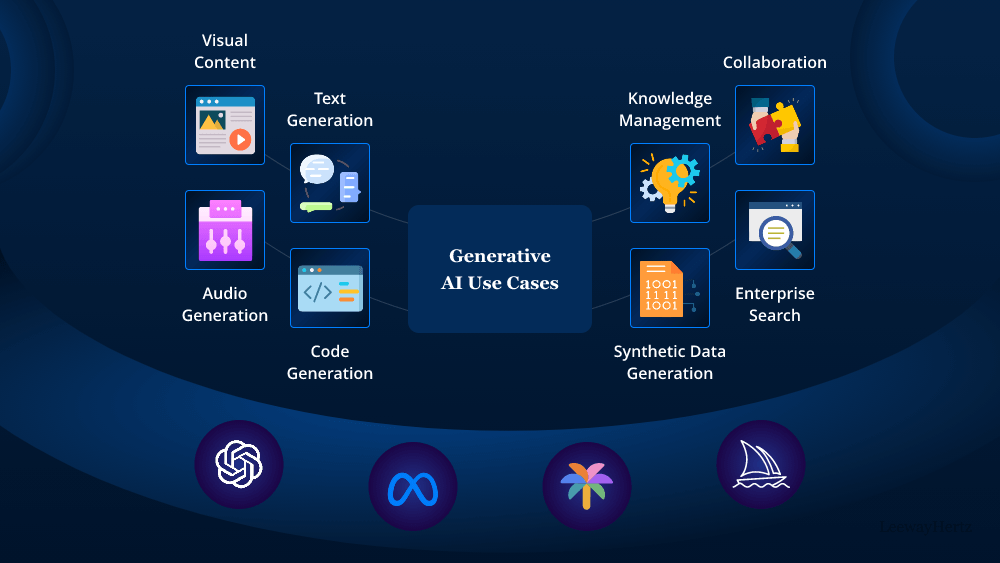
Generative AI refers to algorithms that can generate new content based on existing data. Unlike traditional AI, which primarily analyzes data to identify patterns, generative AI creates original outputs, such as text, images, music, and more. This innovative technology leverages deep learning and neural networks to produce realistic and valuable content, leading to diverse applications across different sectors.
Use Cases of Generative AI
- Content Creation
Generative AI can streamline content creation for blogs, articles, and marketing materials. By analyzing existing content, these algorithms can produce new written material that aligns with specific themes or styles, saving time and resources for businesses and content creators. - Design and Art
In the creative industries, generative AI is being utilized to create visual art and designs. Artists can use these tools to experiment with different styles, generate unique artwork, or even design products, making the creative process more efficient and innovative. - Gaming
In the gaming sector, generative AI can develop characters, landscapes, and even entire game levels. This not only enhances the gaming experience but also reduces the time and cost associated with game development. - Music Composition
Generative AI is making waves in music by composing original pieces. Musicians can collaborate with these systems to create new songs or enhance existing ones, expanding the boundaries of musical creativity. - Healthcare
In healthcare, generative AI is being used to analyze patient data, predict outcomes, and even design new drugs. By simulating various scenarios, healthcare professionals can make more informed decisions, leading to better patient care.
Applications of Generative AI
- Marketing and Advertising
Generative AI is transforming marketing strategies by personalizing advertisements and creating engaging content tailored to target audiences. This enhances customer engagement and improves conversion rates. - Education
In the education sector, generative AI can produce customized learning materials, quizzes, and educational games. This helps educators create personalized learning experiences that cater to individual student needs. - Virtual Reality and Augmented Reality
Generative AI plays a significant role in developing immersive virtual and augmented reality environments. It can generate realistic 3D models and interactive scenarios, enhancing user experience in gaming and training simulations. - Fashion and Retail
In fashion, generative AI is used to design clothing and accessories based on current trends and consumer preferences. This can lead to faster production cycles and more targeted marketing efforts. - Finance
In the finance sector, generative AI aids in fraud detection, risk assessment, and algorithmic trading. By analyzing historical data, it can generate predictive models that help financial institutions make better decisions.
Solutions for Implementing Generative AI
- Data Preparation
The success of generative AI largely depends on the quality of the data used for training. Organizations should invest in data cleaning and preparation to ensure that the algorithms have access to accurate and relevant information. - Choosing the Right Tools
Selecting the appropriate tools and frameworks for generative AI is crucial. Organizations should evaluate different software and platforms based on their specific needs and the types of content they wish to generate. - Training and Fine-tuning Models
Once the data is prepared, the next step is to train and fine-tune generative models. This involves adjusting parameters to improve performance and ensuring that the generated outputs meet the desired quality standards. - Testing and Validation
After training, it’s essential to test the generated content for quality and accuracy. Organizations should implement rigorous validation processes to ensure that the outputs are useful and reliable. - Integration into Existing Systems
To maximize the benefits of generative AI, organizations must integrate these systems into their existing workflows. This may involve developing APIs or adopting new software that complements current processes.
Conclusion
Generative AI is a powerful tool that offers a wide array of use cases and applications across various industries. By leveraging its capabilities, organizations can streamline processes, enhance creativity, and make data-driven decisions. As the technology continues to evolve, its potential to transform the way we create and interact with content is immense. Embracing generative AI can pave the way for innovation and efficiency, making it a vital component of future business strategies.
By understanding its applications and implementing the right solutions, businesses can harness the full potential of generative AI, leading to increased competitiveness and success in the digital age.
 Tech blog
Leave a comment