Artificial Intelligence (AI) is advancing rapidly, driven by innovations in machine learning, big data, and automation. One of the most impactful breakthroughs is the advent of Automated Machine Learning, or AutoML. By automating key stages of the machine learning process, AutoML is making AI more accessible, efficient, and scalable. In this article, we’ll explore how AutoML is transforming AI, focusing on the technology’s potential to democratize machine learning, accelerate development, and enable organizations to leverage AI at scale.
What is AutoML?
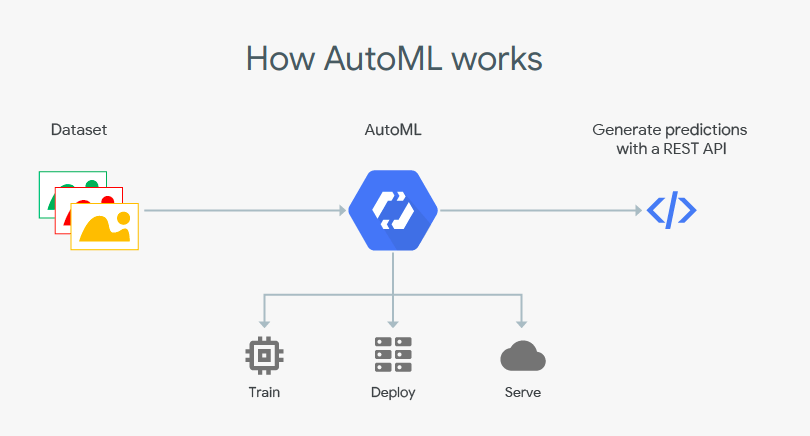
AutoML, short for Automated Machine Learning, is a technology designed to automate the end-to-end process of applying machine learning to real-world problems. Traditionally, building machine learning models required a team of data scientists, engineers, and subject matter experts. They would spend significant time cleaning data, selecting models, tuning parameters, and evaluating performance. AutoML streamlines these steps by automating many complex processes, reducing the need for deep technical expertise while increasing speed and accuracy.
AutoML systems handle tasks such as:
- Data preprocessing and cleaning
- Model selection and hyperparameter tuning
- Feature engineering
- Model training and evaluation
How AutoML is Transforming AI
1. Democratizing AI for Non-Experts
One of the most significant ways AutoML is transforming AI is by lowering the barriers to entry. Traditionally, companies required highly specialized talent—data scientists and machine learning engineers—to build and deploy AI models. This was both expensive and time-consuming. Now, with AutoML, even individuals without an advanced background in machine learning can build powerful AI models. By automating much of the complexity, AutoML allows professionals from various fields—such as business analysts, marketing teams, and operations managers—to use machine learning to solve problems, create models, and analyze data effectively.
This democratization of AI means that smaller organizations or teams with limited technical resources can now compete with larger enterprises by leveraging machine learning. AutoML empowers more industries to adopt AI, speeding up innovation and leading to better decision-making across sectors.
2. Accelerating the Development of AI Models
Another way AutoML is transforming AI is by drastically speeding up the process of developing machine learning models. Building a custom AI model from scratch can take weeks or even months, depending on the complexity of the data and problem at hand. AutoML can shrink this time frame considerably. By automating tasks like model selection, hyperparameter tuning, and feature engineering, AutoML cuts down the amount of manual effort involved in creating machine learning models.
For businesses and researchers, this translates into faster innovation cycles. Instead of spending weeks on model development, teams can now iterate through various model designs within hours or days. The ability to experiment quickly with different models is critical for AI development, as it allows teams to find the most accurate and efficient solution faster.
3. Improving Accuracy and Performance
The ability of AutoML to automate model tuning also contributes to improved accuracy and performance. In machine learning, finding the optimal combination of model parameters and architectures is crucial for creating highly accurate models. However, this is often a tedious and time-consuming process, even for experienced data scientists. AutoML algorithms are designed to explore a large number of possible models and parameter settings automatically, optimizing the performance of the final model.
This can lead to better-performing models compared to manually designed solutions, especially when dealing with large and complex datasets. The use of advanced search algorithms, along with reinforcement learning techniques, enables AutoML to create models that are highly customized for the specific task at hand, leading to superior results in areas like image recognition, natural language processing, and predictive analytics.
4. Enabling Scalability in AI Deployment
Scaling AI across an organization has traditionally been challenging due to the high cost and technical expertise required to develop and deploy machine learning models. AutoML is transforming AI by enabling organizations to scale their AI initiatives more easily. AutoML platforms can be used to create models that are scalable, allowing organizations to deploy AI across multiple business units or applications.
For example, once an AutoML system creates a model, it can easily be adapted or retrained for use in other departments or for different business functions. This ability to scale helps companies optimize operations, automate processes, and improve decision-making without constantly needing to invest in additional machine learning resources.
5. Bridging the AI Talent Gap
The global demand for AI expertise has outpaced the supply of qualified professionals. AutoML is helping to bridge this talent gap by making AI development more accessible to those without a formal background in machine learning. Instead of needing a full team of experts, organizations can leverage AutoML tools to develop AI solutions, allowing their data analysts or software developers to create models that would have previously required specialized knowledge.
This transformation of AI development is not only making AI more widespread but is also fostering a new generation of AI practitioners who can focus on higher-level problem-solving while relying on AutoML for much of the heavy lifting.
The Future of AI with AutoML
The impact of AutoML on the field of AI is only just beginning to be realized. As AutoML systems become more advanced and capable, they will continue to transform how AI is used across industries. With its ability to democratize AI, accelerate development, improve model performance, enable scalability, and bridge the talent gap, AutoML will play a pivotal role in shaping the future of AI.
In the coming years, we can expect even greater integration of AutoML with AI workflows, where models will not only be automatically built but also automatically maintained and improved over time. This evolution will further reduce the need for manual intervention, enabling truly autonomous AI systems that can learn, adapt, and scale on their own.
Conclusion
The transformation of AI through AutoML is already revolutionizing industries by making machine learning more accessible, efficient, and scalable. By automating key processes, AutoML is enabling a broader range of professionals to leverage the power of AI, fostering innovation, and driving better decision-making. As this technology continues to evolve, its impact on AI development will only grow, unlocking new possibilities for businesses and researchers alike.
 Tech blog
Leave a comment