In the ever-evolving landscape of business analytics, understanding and optimizing customer lifetime value (LTV) has become crucial. The advent of artificial intelligence (AI) in LTV models is revolutionizing how businesses forecast and enhance this key metric. This article explores the role of AI in LTV models, emphasizing how it simplifies and refines customer value predictions.
What is Customer Lifetime Value (LTV)?
Customer Lifetime Value (LTV) is a prediction of the net profit attributed to the entire future relationship with a customer. It is a critical metric for businesses because it helps determine how much to invest in acquiring and retaining customers. A higher LTV indicates that a customer is more valuable over the long term, guiding businesses in their strategic planning and marketing efforts.
The Integration of AI in LTV Models
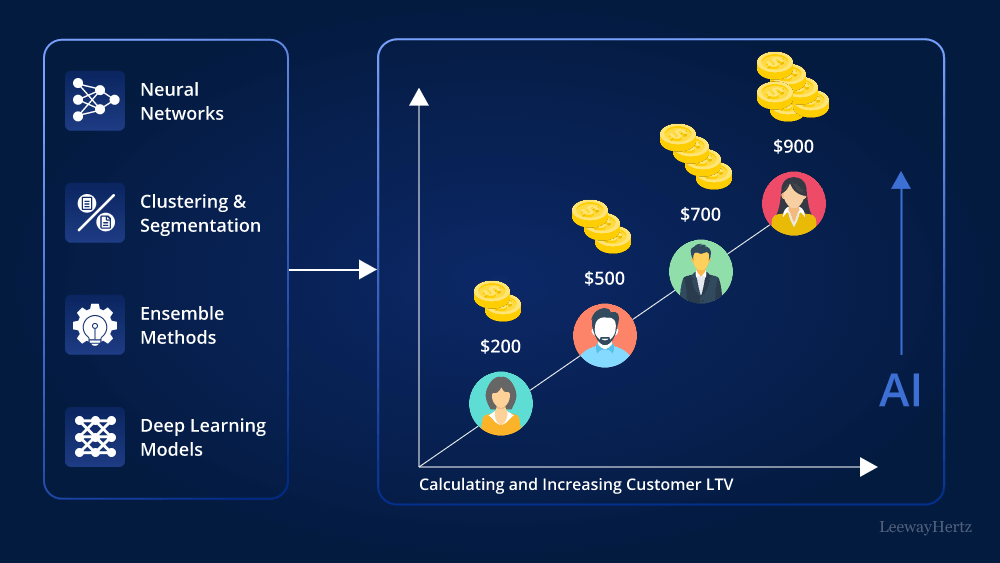
Artificial Intelligence (AI) is transforming various aspects of business operations, and LTV models are no exception. Traditional LTV models often rely on historical data and straightforward calculations. However, the integration of AI in LTV models adds a layer of sophistication by leveraging machine learning algorithms and predictive analytics.
Enhanced Data Analysis
AI in LTV models enables more sophisticated data analysis. Traditional methods might use basic demographic and transactional data to estimate LTV. In contrast, AI can analyze vast amounts of structured and unstructured data from multiple sources, including social media interactions, customer feedback, and purchasing behavior. This comprehensive data analysis provides a more accurate and nuanced understanding of customer behavior and value.
Predictive Analytics
One of the most significant advantages of AI in LTV models is its ability to perform advanced predictive analytics. Machine learning algorithms can identify patterns and trends in customer data that might not be immediately apparent through manual analysis. By training on historical data, these algorithms can predict future behaviors and customer value with greater precision. This allows businesses to anticipate customer needs and tailor their strategies accordingly.
Personalization and Targeting
AI-powered LTV models facilitate enhanced personalization and targeting. By analyzing individual customer data, AI can segment customers into distinct groups based on their predicted LTV. This segmentation allows businesses to design targeted marketing campaigns and personalized offers that are more likely to resonate with each customer segment. Personalized interactions can increase customer satisfaction and loyalty, further boosting LTV.
Practical Applications of AI in LTV Models
The integration of AI in LTV models is not just theoretical; it has practical applications across various industries. Here are a few examples of how businesses can leverage AI to enhance their LTV models:
Retail
In the retail sector, AI can analyze customer purchase histories, browsing behavior, and even social media activity to predict LTV. This information helps retailers develop personalized promotions and product recommendations, leading to increased sales and customer retention.
Subscription Services
For subscription-based businesses, AI in LTV models can predict customer churn and identify high-value subscribers. By understanding which subscribers are likely to stay longer or contribute more revenue, companies can design retention strategies and enhance the overall customer experience.
Financial Services
In the financial industry, AI can analyze transaction data, customer interactions, and external factors to predict LTV. Financial institutions can use these insights to offer personalized financial products and services, improving customer satisfaction and long-term profitability.
Benefits of Using AI in LTV Models
The application of AI in LTV models brings several benefits to businesses, including:
Improved Accuracy
AI algorithms can process vast amounts of data and identify patterns that traditional methods might miss. This leads to more accurate predictions of customer lifetime value, helping businesses make better-informed decisions.
Enhanced Efficiency
Automating the analysis and prediction processes with AI reduces the time and effort required for LTV modeling. Businesses can quickly update their models and respond to changing customer behaviors in real-time.
Better Customer Insights
AI provides deeper insights into customer behavior and preferences. By understanding these insights, businesses can develop more effective marketing strategies and improve customer engagement.
Challenges and Considerations
While AI in LTV models offers numerous advantages, it is essential to address potential challenges:
Data Quality
The effectiveness of AI in LTV models depends on the quality of the data used. Inaccurate or incomplete data can lead to flawed predictions. Ensuring data accuracy and consistency is crucial for successful AI implementation.
Complexity
AI models can be complex and require specialized expertise to develop and maintain. Businesses may need to invest in skilled personnel or external consultants to effectively leverage AI in their LTV models.
Ethical Concerns
The use of AI raises ethical considerations, such as data privacy and security. Businesses must ensure they handle customer data responsibly and comply with relevant regulations.
Conclusion
The integration of AI in LTV models represents a significant advancement in customer value analysis. By leveraging sophisticated data analysis, predictive analytics, and personalization, AI enhances the accuracy and effectiveness of LTV predictions. While there are challenges to address, the benefits of AI in optimizing customer lifetime value are substantial. As businesses continue to embrace AI, they will be better equipped to understand and maximize the value of their customers, driving growth and success in an increasingly competitive marketplace.
 Tech blog
Leave a comment