Introduction
In today’s rapidly evolving business environment, ensuring regulatory compliance is more critical than ever. With numerous rules and regulations governing industries worldwide, organizations are under pressure to maintain strict compliance while optimizing operations. Generative AI for compliance has emerged as a powerful tool, offering businesses an innovative solution to manage these challenges efficiently. This article explores how generative AI is transforming compliance processes and why it has become indispensable for businesses seeking to stay ahead in a competitive landscape.
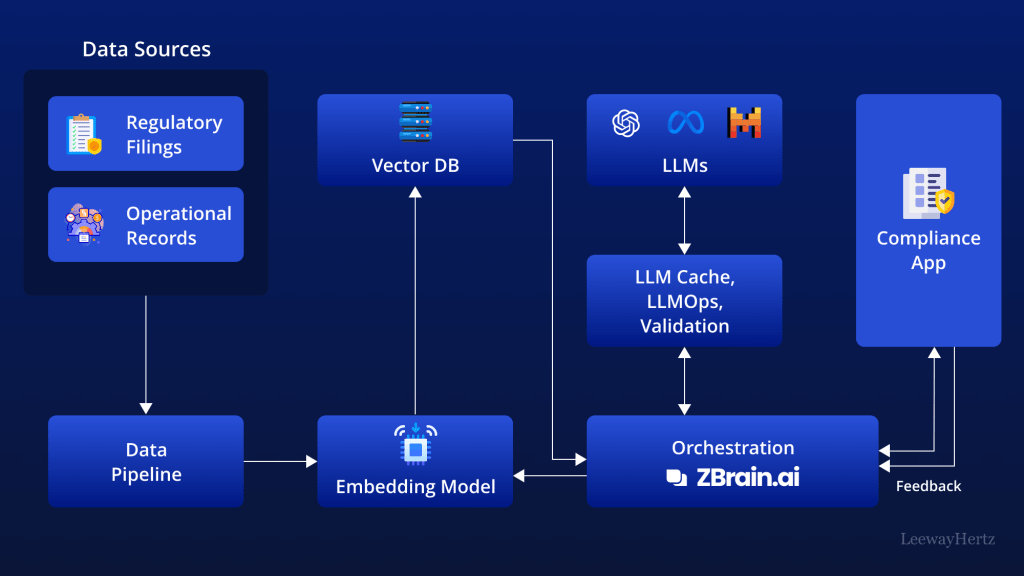
What is Generative AI for Compliance?
Generative AI refers to a subset of artificial intelligence that can create new content, models, or predictions based on vast datasets. In the context of compliance, generative AI plays a key role in automating and streamlining tasks such as document generation, policy monitoring, risk assessment, and more. Instead of relying on traditional, manual methods, companies can leverage generative AI to generate insights that ensure adherence to regulatory standards more quickly and accurately.
The application of generative AI for compliance spans multiple industries, from finance to healthcare. Its ability to process vast amounts of data in real-time allows organizations to meet stringent regulatory requirements without the burden of labor-intensive manual processes.
How Generative AI Enhances Compliance Efforts
- Automated Risk Detection and Management
One of the primary advantages of generative AI for compliance is its capability to automate risk detection. Through machine learning algorithms, generative AI systems can scan and analyze historical and real-time data to identify potential compliance risks. By doing so, businesses can swiftly detect issues before they escalate into larger problems, saving time and reducing penalties.
Generative AI can also help organizations prioritize risks, enabling compliance teams to focus on the most pressing concerns while automating less critical tasks. This not only improves operational efficiency but also helps ensure that the organization remains compliant with evolving regulations.
- Streamlining Document Generation
Compliance often involves extensive documentation, from regulatory reports to legal contracts. Generative AI can automate the creation of these documents, ensuring they adhere to regulatory standards. AI-powered systems can generate reports based on pre-set templates, reducing human error and ensuring that every detail aligns with compliance requirements. This reduces the time and effort needed to produce and review documents while enhancing accuracy.
Moreover, generative AI can update these documents in real-time as regulations change. Businesses can ensure that their policies and reports always reflect the most up-to-date standards, thereby minimizing the risk of non-compliance.
- Continuous Monitoring of Regulatory Changes
Keeping up with changing regulations is a major challenge for compliance teams. Generative AI for compliance can automatically monitor regulatory updates and integrate them into the organization’s internal processes. By analyzing new regulatory developments, AI systems can recommend necessary changes to policies, procedures, or documentation.
This proactive approach helps organizations stay compliant without having to manually track every regulation change, which can be time-consuming and prone to oversight. Businesses can remain ahead of the curve, adapting to regulatory changes swiftly and seamlessly.
- Improving Decision-Making with Predictive Analytics
Generative AI excels at making sense of complex data sets. In compliance, it can use predictive analytics to foresee potential risks and recommend preventive measures. For instance, AI systems can predict how regulatory shifts might impact a business, allowing leaders to make informed decisions ahead of time.
By leveraging generative AI for compliance, organizations can anticipate and mitigate risks before they occur, avoiding costly fines or reputational damage. Predictive analytics not only enhances decision-making but also contributes to a culture of proactive compliance.
The Benefits of Generative AI for Compliance
- Cost Efficiency
One of the significant advantages of generative AI for compliance is its potential to reduce costs. Manual compliance processes often require significant time, resources, and labor. By automating these tasks, businesses can allocate fewer resources to compliance while still maintaining accuracy and effectiveness. This enables companies to reduce operational expenses, ensuring compliance without overburdening their teams.
- Scalability
As businesses grow, so do their compliance requirements. Generative AI allows for scalability, handling increasing volumes of data and compliance tasks without requiring additional human labor. Whether an organization is expanding to new markets or facing more stringent regulations, generative AI can adapt and scale with the business, ensuring seamless compliance at all levels.
- Minimizing Human Error
Compliance tasks are often repetitive and data-intensive, making them prone to human error. Generative AI can eliminate these errors by automating processes and ensuring consistency across all tasks. This not only improves accuracy but also reduces the risk of regulatory penalties caused by inadvertent mistakes.
- Enhanced Accuracy and Consistency
Generative AI for compliance ensures that tasks are completed with a high level of precision and consistency. Unlike manual processes that may vary from person to person, AI-powered systems follow set algorithms, ensuring that each task is completed uniformly. This level of accuracy is particularly important in compliance, where even small deviations can result in non-compliance and penalties.
Challenges and Considerations
While generative AI for compliance offers numerous advantages, it is important for organizations to consider the challenges. Data privacy, security, and ethical concerns must be addressed when implementing AI systems. Furthermore, organizations should ensure that their AI solutions are transparent and explainable, so compliance teams can understand the decisions and insights provided by the AI.
Additionally, while generative AI can greatly enhance compliance efforts, it should not entirely replace human oversight. AI systems are not infallible, and there may be cases where human judgment is required to interpret or verify AI-generated insights.
Conclusion
Generative AI for compliance is revolutionizing how organizations manage their regulatory responsibilities. From automating risk detection and document generation to enhancing decision-making with predictive analytics, generative AI offers a wealth of benefits that can streamline compliance processes, reduce costs, and improve accuracy.
As regulations continue to evolve, businesses that adopt generative AI for compliance will be better positioned to navigate these changes efficiently. While challenges such as data privacy and ethical concerns remain, the advantages far outweigh the risks. In the future, generative AI will likely play an even greater role in shaping compliance strategies, making it an essential tool for businesses of all sizes.
 Tech blog
Leave a comment