Introduction: Understanding AI in Banking and Finance
Artificial Intelligence (AI) is revolutionizing various sectors, and the realm of banking and finance is no exception. As financial institutions strive to enhance efficiency, security, and customer satisfaction, AI in banking and finance has emerged as a pivotal tool. This article delves into the ways AI is reshaping the industry, offering insights into its applications, benefits, and future prospects.
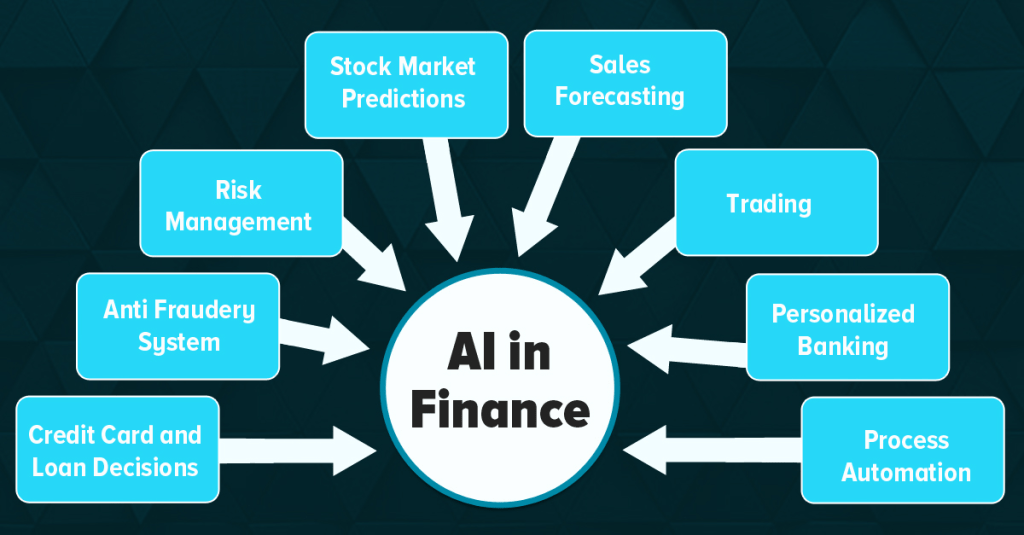
AI in Banking: Enhancing Customer Experience
One of the most noticeable impacts of AI in banking is its role in transforming customer interactions. Traditional banking services often involve long wait times and cumbersome processes. AI-powered chatbots and virtual assistants are now providing 24/7 support, handling inquiries, and performing transactions with remarkable accuracy. These AI tools streamline processes, reduce human error, and offer personalized assistance, thus significantly improving the customer experience.
Fraud Detection and Prevention: AI’s Critical Role
Fraud detection is another area where AI in banking and finance proves invaluable. Financial institutions face an ongoing challenge to safeguard sensitive data from fraudulent activities. AI algorithms analyze vast amounts of transaction data in real-time to identify patterns and anomalies indicative of fraudulent behavior. By leveraging machine learning and predictive analytics, AI systems can detect and prevent fraud more efficiently than traditional methods, enhancing overall security.
Personalized Financial Services: AI Tailors Solutions
Personalization is a key trend in the modern banking and finance sector, driven largely by AI. By analyzing customer data, AI systems can offer tailored financial advice and product recommendations. This level of personalization helps customers make informed financial decisions and enhances their overall satisfaction with banking services. For example, AI can suggest investment opportunities based on individual risk profiles and financial goals.
Risk Management and Compliance: AI’s Analytical Power
Managing risk and ensuring regulatory compliance are critical aspects of banking and finance. AI’s analytical capabilities play a crucial role in these areas. AI models can predict market trends, assess credit risks, and ensure adherence to regulatory requirements. By processing vast amounts of data quickly and accurately, AI helps financial institutions mitigate risks and comply with ever-evolving regulations.
Operational Efficiency: Automating Routine Tasks
AI is streamlining operations within the banking sector by automating routine tasks. Processes such as data entry, account reconciliation, and transaction processing can be automated using AI technologies. This automation not only reduces operational costs but also minimizes the likelihood of human error, leading to more efficient and reliable banking operations.
AI and Financial Forecasting: Data-Driven Insights
Financial forecasting is another domain where AI in banking and finance offers significant advantages. AI algorithms analyze historical financial data to make accurate predictions about future market trends. This data-driven approach helps financial institutions make informed investment decisions and develop strategies to navigate market fluctuations. By leveraging AI, banks and financial institutions can gain a competitive edge through more accurate forecasting and strategic planning.
Challenges and Considerations: Navigating the AI Landscape
While AI offers numerous benefits, its implementation in banking and finance is not without challenges. Data privacy and security concerns are paramount, as AI systems handle sensitive financial information. Additionally, the integration of AI requires significant investment in technology and training. Financial institutions must also address potential biases in AI algorithms to ensure fairness and transparency.
Future Prospects: The Evolving Role of AI
Looking ahead, the role of AI in banking and finance is expected to continue evolving. Advances in AI technology, such as improved machine learning algorithms and enhanced data analytics capabilities, will further transform the industry. The integration of AI with emerging technologies like blockchain and quantum computing could open new avenues for innovation and efficiency in financial services.
Conclusion: Embracing the AI Revolution
AI in banking and finance is ushering in a new era of innovation and efficiency. From enhancing customer experience to improving fraud detection and personalizing financial services, the impact of AI is profound and far-reaching. As financial institutions navigate the complexities of AI implementation, they must balance technological advancements with considerations of privacy, security, and fairness. Embracing AI’s potential while addressing its challenges will be key to harnessing its full benefits and driving the future of banking and finance.
 Tech blog
Leave a comment