Agentic RAG, or Agentic Retrieval-Augmented Generation, is an emerging technology in artificial intelligence (AI) that combines the power of retrieval-based systems and generative models. This approach enhances the performance of AI systems, making them more efficient and effective in various tasks, from answering complex queries to providing real-time, data-driven solutions. In this article, we’ll delve into what Agentic RAG is, explore its types, discuss its applications, and guide you on its implementation.
What is Agentic RAG?
Agentic RAG stands for Agentic Retrieval-Augmented Generation, a method that integrates retrieval-based AI systems with generative models. Traditional AI systems typically rely on either retrieval or generation to provide responses or solutions:
- Retrieval-Based Systems: These systems search for relevant information from a pre-existing database or knowledge base, returning the most pertinent results. Think of it like a search engine: it retrieves the best match from what’s already available.
- Generative Models: In contrast, generative models create responses or outputs based on their training data, using deep learning to simulate human-like responses or generate new content.
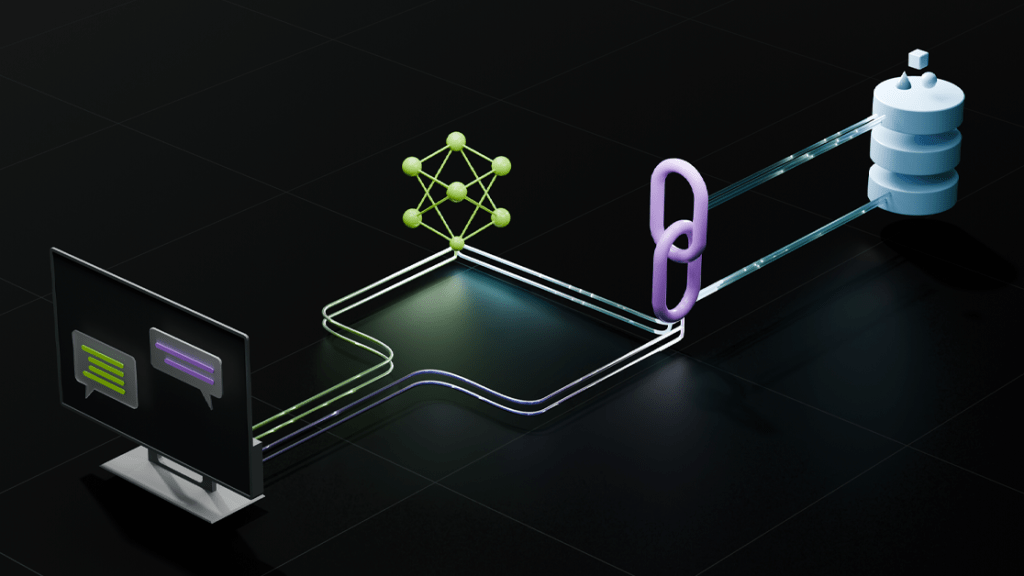
Agentic RAG blends these approaches, using the generative model to craft responses while simultaneously pulling in specific, relevant data from the retrieval system. This combination results in AI that can generate contextually accurate and information-rich responses.
Types of Agentic RAG
Agentic RAG can be categorized into several types, depending on the structure and nature of the retrieval and generation processes:
- Static Agentic RAG: This type uses a fixed knowledge base for retrieval, making it suitable for applications where the information does not change frequently. It provides consistency and reliability, especially in well-defined domains.
- Dynamic Agentic RAG: Dynamic Agentic RAG systems update their knowledge base regularly, allowing them to retrieve the latest information. This type is ideal for applications that require real-time data, such as news aggregation or customer support.
- Personalized Agentic RAG: By incorporating user-specific data, this type of Agentic RAG tailors responses based on individual preferences or past interactions. This personalization enhances user engagement and satisfaction.
- Context-Aware Agentic RAG: These systems are designed to understand and incorporate contextual cues into their retrieval and generation processes. This type is particularly useful in complex, multi-turn conversations where maintaining context is crucial.
Applications of Agentic RAG
Agentic RAG has a wide array of applications across different industries, thanks to its ability to provide accurate, relevant, and timely information. Here are some key applications:
- Customer Support: Agentic RAG can be used to create advanced chatbots and virtual assistants that not only respond to customer queries but also provide detailed, contextually accurate answers by retrieving relevant data from a knowledge base.
- Content Generation: In content creation, Agentic RAG can generate articles, reports, or creative content while pulling in up-to-date information from trusted sources. This ensures that the content is both relevant and accurate.
- Healthcare: In the medical field, Agentic RAG can assist doctors by retrieving relevant medical literature, patient history, and generating personalized recommendations. This approach can improve decision-making and patient outcomes.
- E-Learning and Education: Agentic RAG can enhance learning platforms by providing students with personalized learning paths and resources, adapting to their progress and retrieving relevant educational content.
- Research and Development: For researchers, Agentic RAG systems can assist by gathering relevant studies, data, and generating hypotheses or summaries, significantly speeding up the research process.
Implementing Agentic RAG
Implementing Agentic RAG involves integrating both retrieval and generation components effectively. Here’s a step-by-step guide on how to implement Agentic RAG in your AI system:
- Define the Problem Scope: Start by clearly defining the problem that Agentic RAG will solve. Understanding the scope will help determine the type of retrieval and generation models required.
- Select the Appropriate Models: Choose retrieval models such as Elasticsearch or dense passage retrieval systems and pair them with generative models like GPT-4 or other advanced language models.
- Integrate Retrieval with Generation: Use frameworks such as LangChain or custom APIs to merge the retrieval and generative components. The retrieval model should feed relevant data into the generative model, enhancing the quality and relevance of the generated outputs.
- Fine-Tuning: Fine-tune both retrieval and generative models based on specific domain requirements. This step ensures that the system accurately understands and responds to queries within the desired context.
- Testing and Evaluation: Rigorously test the system in real-world scenarios to evaluate its performance. Use metrics such as response accuracy, relevance, and user satisfaction to refine the system further.
- Deployment and Monitoring: Deploy the system and continuously monitor its performance. Regular updates to the knowledge base and model retraining are crucial to maintain the system’s accuracy and relevance.
Conclusion
Agentic RAG is a powerful approach that combines the strengths of retrieval and generative AI models to deliver contextually accurate, data-driven responses. By understanding its types, applications, and implementation, businesses and developers can leverage Agentic RAG to enhance AI solutions across various fields, from customer support to healthcare and beyond. As technology continues to evolve, the applications of Agentic RAG will only expand, making it a crucial component in the future of AI-driven solutions.
 Tech blog
Leave a comment