Introduction
Artificial Intelligence (AI) is revolutionizing various industries, and the logistics and supply chain sectors are no exception. The integration of AI in logistics and supply chain processes is driving significant advancements, enhancing operational efficiency, and reducing costs. This article explores the diverse use cases, applications, solutions, and implementation strategies of AI in logistics and supply chain management.
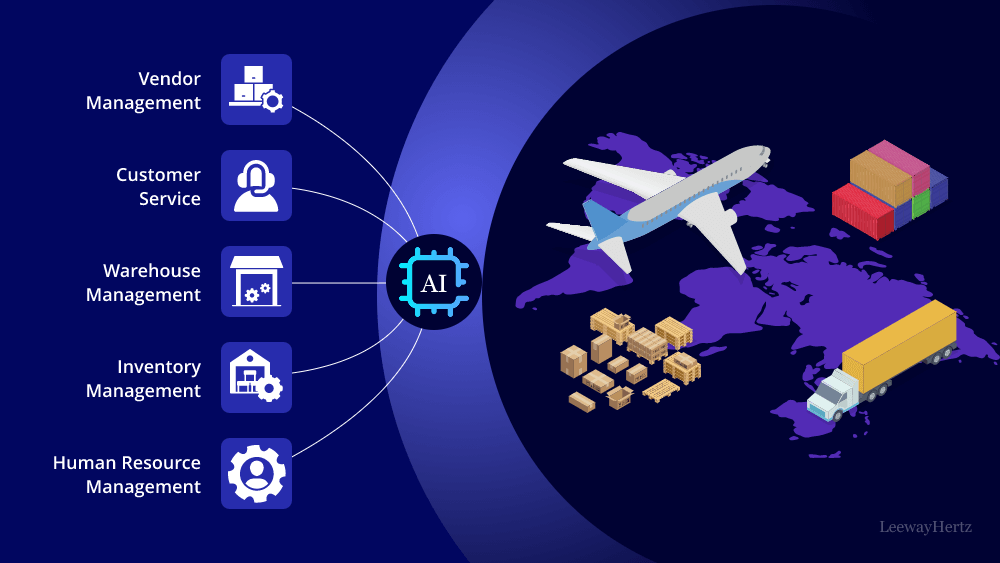
Use Cases of AI in Logistics and Supply Chain
- Predictive Analytics for Demand Forecasting One of the prominent use cases of AI in logistics and supply chain management is predictive analytics. AI algorithms analyze historical data, market trends, and consumer behavior to forecast demand more accurately. By anticipating future demand, companies can optimize inventory levels, reduce stockouts, and prevent overstock situations. This leads to improved customer satisfaction and reduced holding costs.
- Smart Warehousing Solutions AI-powered smart warehousing solutions are transforming how goods are stored and managed. Automated systems using AI-driven robots and drones can efficiently handle tasks such as picking, sorting, and packing. These technologies enhance operational speed, accuracy, and safety within warehouses. Additionally, AI algorithms optimize warehouse layouts and inventory placements, further increasing efficiency.
- Route Optimization and Transportation Management AI in logistics plays a crucial role in route optimization and transportation management. By analyzing traffic patterns, weather conditions, and delivery schedules, AI algorithms determine the most efficient routes for transportation. This optimization reduces fuel consumption, minimizes delivery times, and enhances overall logistics performance.
- Real-Time Tracking and Visibility AI enhances real-time tracking and visibility throughout the supply chain. AI-powered systems provide accurate and up-to-date information on the location and status of shipments. This real-time visibility helps businesses make informed decisions, respond to disruptions swiftly, and improve overall supply chain transparency.
Applications of AI in Logistics and Supply Chain
- Automated Inventory Management Automated inventory management is a significant application of AI in logistics and supply chain. AI-driven systems continuously monitor inventory levels, predict future needs, and automatically reorder products when stock levels fall below predefined thresholds. This reduces manual intervention, minimizes human errors, and ensures that inventory is always at optimal levels.
- Robotic Process Automation (RPA) Robotic Process Automation (RPA) powered by AI streamlines repetitive and mundane tasks in logistics and supply chain operations. Tasks such as data entry, order processing, and invoice management can be automated using AI-driven RPA tools. This not only accelerates processes but also frees up human resources for more strategic roles.
- Enhanced Customer Service through AI Chatbots AI chatbots enhance customer service by providing instant responses to inquiries and handling routine requests. These AI-powered chatbots can manage customer queries related to order status, delivery tracking, and product information. By improving response times and customer engagement, AI chatbots contribute to a better overall customer experience.
- Predictive Maintenance for Equipment AI applications extend to predictive maintenance of equipment used in logistics and supply chain operations. AI algorithms analyze data from machinery to predict potential failures before they occur. This proactive approach to maintenance reduces downtime, lowers repair costs, and ensures smooth operations.
Solutions for Implementing AI in Logistics and Supply Chain
- Integration with Existing Systems Implementing AI in logistics and supply chain requires integration with existing systems. Businesses should evaluate their current technology infrastructure and identify areas where AI can be effectively integrated. Seamless integration with enterprise resource planning (ERP) systems and other software is essential for maximizing the benefits of AI.
- Data Management and Quality Successful AI implementation relies on high-quality data. Companies must ensure that their data is accurate, consistent, and up-to-date. Implementing robust data management practices and investing in data cleansing processes are crucial for the effectiveness of AI solutions in logistics and supply chain management.
- Choosing the Right AI Tools and Platforms Selecting the appropriate AI tools and platforms is vital for achieving desired outcomes. Businesses should assess their specific needs and choose AI solutions that align with their objectives. Collaboration with AI technology providers and consultants can help in identifying the most suitable tools for their logistics and supply chain requirements.
- Training and Change Management Successful AI implementation involves training employees and managing organizational change. Employees should be trained to work effectively with AI-driven systems and understand their roles in the new operational landscape. Change management strategies should be employed to address any resistance and ensure a smooth transition to AI-enhanced processes.
Conclusion
AI in logistics and supply chain is transforming traditional practices and driving efficiency across the industry. From predictive analytics and smart warehousing to route optimization and real-time tracking, the applications of AI are vast and impactful. Implementing AI solutions requires careful planning, integration, and employee training. By leveraging AI, businesses can achieve greater operational efficiency, reduce costs, and enhance customer satisfaction in the ever-evolving logistics and supply chain landscape.
 Tech blog
Leave a comment