Diffusion models have rapidly gained traction in the machine learning community due to their effectiveness in generating high-quality data, such as images, text, and audio. These models work by progressively adding noise to data and then learning to reverse this process to recreate the original data or generate new samples. In this guide, we will explore how to train a diffusion model in a clear, simple, and easy-to-follow manner.
Understanding Diffusion Models
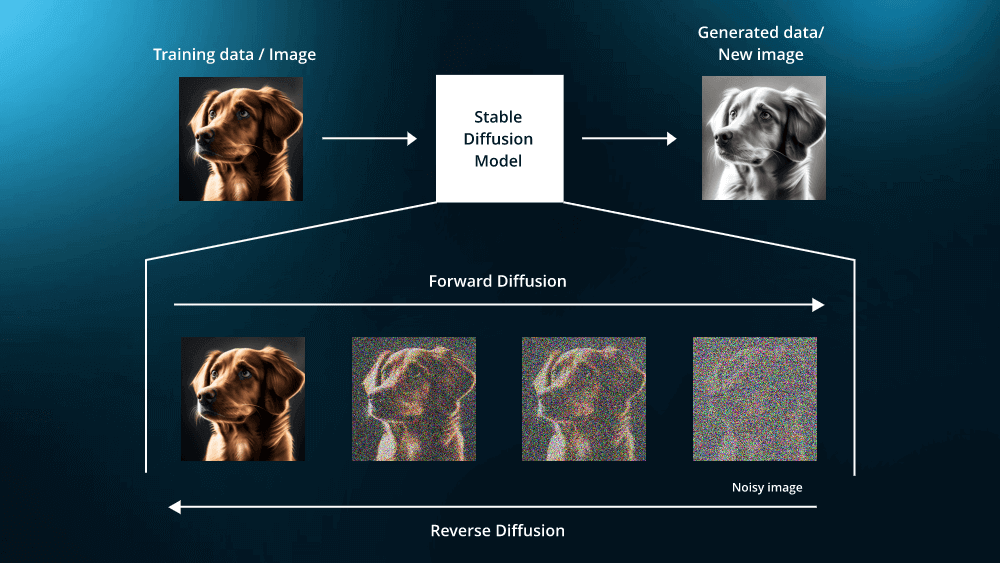
Before delving into how to train a diffusion model, it’s important to grasp the basic concept of what diffusion models are and how they function. A diffusion model is a type of probabilistic model that simulates the process of noise diffusion in data. This involves gradually corrupting clean data by adding noise over several steps. The model is then trained to reverse this process, learning to generate data that is progressively closer to the original, uncorrupted data. This approach is particularly effective in generating realistic data from noise.
Step 1: Preparing the Environment
The first step in understanding how to train a diffusion model is to set up the appropriate environment. This includes having access to a powerful computational setup, such as a GPU, as well as the necessary machine learning frameworks and libraries. Key components include:
- Deep Learning Framework: Choose a framework like TensorFlow or PyTorch, which are widely used in training diffusion models. These frameworks offer the flexibility and tools needed to implement and train complex models.
- Data Handling Libraries: Ensure you have the necessary libraries for data manipulation and processing. Popular choices include NumPy for numerical operations and Pandas for data management.
- Dataset Selection: Choose a dataset that is appropriate for the type of data you wish to generate. For example, if you’re focusing on image generation, datasets like CIFAR-10, MNIST, or CelebA are commonly used. The choice of dataset will directly impact the performance and outcome of your diffusion model.
Step 2: Data Preprocessing
Data preprocessing is a crucial step in training a diffusion model. Properly preprocessed data can significantly improve the performance of the model. When learning how to train a diffusion model, consider the following aspects of data preprocessing:
- Normalization: Normalize your data to ensure that it is within a consistent range. This can help the model learn more effectively by reducing the complexity of the data.
- Data Augmentation: In cases where your dataset is limited, data augmentation techniques can be applied to increase the variety of training data. This includes techniques like flipping, rotating, or adding noise to images.
- Noise Addition: Since diffusion models work by learning to reverse noise, carefully add varying levels of noise to your data. This step simulates the diffusion process and is essential for teaching the model to generate data from noise.
Step 3: Model Architecture
Choosing the right model architecture is another vital step in how to train a diffusion model. The architecture of the model determines how well it can learn to reverse the diffusion process and generate realistic data. Some important considerations include:
- Model Selection: You may opt for existing diffusion model architectures or design a custom one based on your specific needs. Popular choices include the U-Net architecture, which is well-suited for tasks like image generation.
- Parameter Tuning: Adjusting hyperparameters such as learning rate, batch size, and the number of diffusion steps is critical for achieving optimal model performance. Experiment with different values to find the best combination for your specific task.
- Loss Function: The choice of loss function plays a significant role in guiding the model’s learning process. Typically, a combination of reconstruction loss and noise estimation loss is used to train diffusion models effectively.
Step 4: Training the Diffusion Model
Training is the most intensive part of learning how to train a diffusion model. During this phase, the model iteratively learns to reverse the noise addition process by minimizing the loss function. Here’s what to consider during training:
- Training Process: The training process involves multiple iterations where the model gradually improves its ability to generate data. Monitor the model’s performance using validation data to ensure it is learning effectively.
- Monitoring and Evaluation: Continuously evaluate the model’s performance by generating samples at various stages of training. This allows you to assess whether the model is converging and improving over time.
- Fine-Tuning: If the model’s performance plateaus, consider fine-tuning the model by adjusting hyperparameters or adding more training data. This step is crucial for pushing the model’s performance further.
Step 5: Post-Training and Evaluation
After the training process is complete, the next step in how to train a diffusion model involves evaluating and fine-tuning the final model. This includes:
- Generating Samples: Use the trained diffusion model to generate new samples from noise. Evaluate these samples based on how closely they resemble the original data.
- Model Validation: Compare the generated data with the original dataset to assess the quality and accuracy of the model. This validation helps in determining the model’s generalization capability.
- Optimization: Based on the evaluation, further optimize the model by adjusting parameters or retraining with additional data. This step ensures that the diffusion model is robust and capable of generating high-quality data.
Conclusion
Understanding how to train a diffusion model is a valuable skill in the field of machine learning, especially given the model’s ability to generate realistic data. By following these steps—preparing the environment, preprocessing data, selecting the right model architecture, training the model, and post-training evaluation—you can effectively train a diffusion model. With practice and experimentation, you’ll gain the expertise needed to create models that excel in generating high-quality data across various domains.
 Tech blog
Leave a comment