Financial reporting is a critical aspect of any business, ensuring stakeholders are well-informed about the financial health and performance of a company. In recent years, AI for financial reporting has emerged as a game-changer, promising increased accuracy, efficiency, and insight. This article explores the transformative power of AI in financial reporting, highlighting its benefits, applications, and future potential.
The Evolution of Financial Reporting
Traditional Financial Reporting Challenges
Traditional financial reporting processes are often manual, time-consuming, and prone to errors. Accountants and financial analysts spend countless hours gathering data, reconciling accounts, and preparing reports. Human error, data discrepancies, and outdated systems can lead to inaccurate financial statements, affecting decision-making and compliance.
The Rise of AI for Financial Reporting
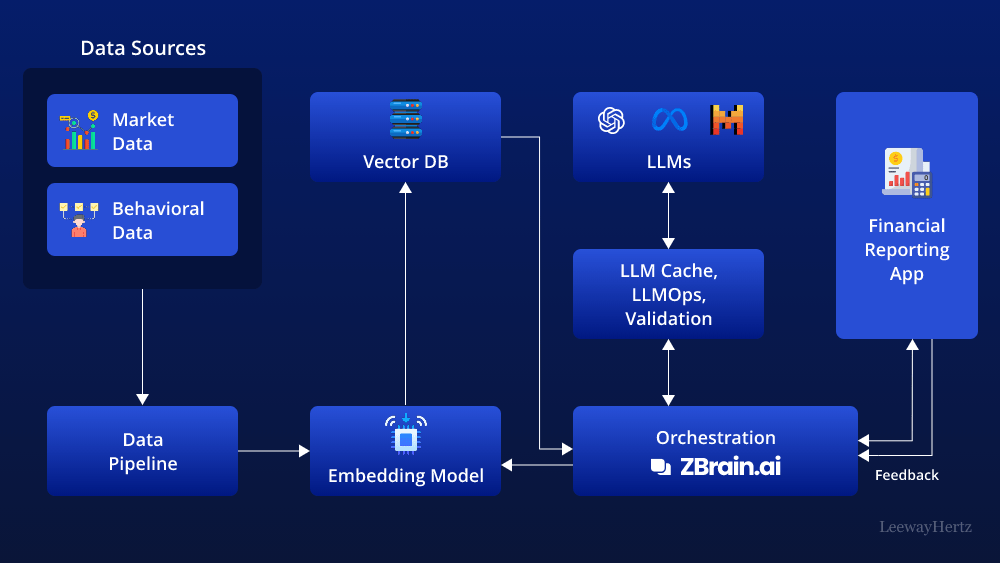
AI for financial reporting is revolutionizing these processes by automating data collection, analysis, and report generation. AI technologies like machine learning and natural language processing can process vast amounts of data quickly and accurately, reducing the risk of errors and enabling real-time insights.
Benefits of AI for Financial Reporting
Enhanced Accuracy and Precision
One of the most significant advantages of AI for financial reporting is its ability to improve accuracy. AI algorithms can identify patterns and anomalies in financial data that may be missed by human analysts. By continuously learning from new data, AI systems can enhance their predictive capabilities, ensuring that financial reports are more precise and reliable.
Increased Efficiency and Time Savings
AI automates repetitive and time-consuming tasks, such as data entry, reconciliation, and report generation. This automation frees up valuable time for financial professionals to focus on higher-level analysis and strategic decision-making. As a result, companies can produce financial reports faster, meet deadlines more easily, and reduce operational costs.
Real-Time Financial Insights
AI for financial reporting enables real-time data analysis, allowing companies to monitor their financial health continuously. Real-time insights empower businesses to make informed decisions quickly, respond to market changes, and seize new opportunities. This agility is crucial in today’s fast-paced business environment.
Applications of AI in Financial Reporting
Automated Data Entry and Reconciliation
AI-powered systems can automatically extract and categorize data from various sources, such as invoices, receipts, and bank statements. By automating data entry and reconciliation, AI eliminates the need for manual intervention, reducing the risk of errors and ensuring data consistency.
Financial Statement Analysis
AI algorithms can analyze financial statements to identify trends, correlations, and potential risks. For example, AI can detect unusual expense patterns or revenue fluctuations, enabling companies to investigate and address issues proactively. This level of analysis goes beyond traditional methods, providing deeper insights into financial performance.
Predictive Analytics and Forecasting
AI for financial reporting is not limited to analyzing historical data. It can also predict future financial performance based on current trends and external factors. Predictive analytics helps businesses anticipate cash flow issues, optimize budgeting, and plan for growth. By leveraging AI’s forecasting capabilities, companies can make more accurate and strategic financial decisions.
Regulatory Compliance and Fraud Detection
Compliance with financial regulations is a top priority for businesses. AI can assist in monitoring compliance by continuously scanning financial data for potential violations. Additionally, AI’s anomaly detection capabilities can identify fraudulent activities, such as unauthorized transactions or suspicious patterns, helping to safeguard company assets.
Future Prospects of AI for Financial Reporting
Integration with Blockchain Technology
The future of AI for financial reporting looks promising, with the potential integration of blockchain technology. Blockchain can provide a secure and transparent ledger for financial transactions, enhancing the trustworthiness of financial reports. AI can leverage blockchain data to improve the accuracy and traceability of financial information.
Advanced Natural Language Processing
Natural language processing (NLP) is another area with significant potential. NLP allows AI systems to understand and interpret human language, enabling them to generate comprehensive financial reports from unstructured data sources, such as emails and documents. This capability can further streamline the reporting process and provide more detailed and contextualized insights.
Personalized Financial Reporting
AI can also enable personalized financial reporting tailored to the needs of different stakeholders. For instance, AI can generate customized reports for executives, investors, or regulatory authorities, highlighting the most relevant information for each audience. Personalized reporting enhances communication and ensures that stakeholders receive the insights they need.
Conclusion
AI for financial reporting is transforming the way businesses manage and analyze their financial data. By enhancing accuracy, increasing efficiency, and providing real-time insights, AI empowers companies to make more informed and strategic decisions. As AI technology continues to evolve, its applications in financial reporting will only expand, promising even greater benefits for businesses in the future. Embracing AI for financial reporting is not just a technological upgrade but a strategic move towards a more agile, accurate, and insightful financial management system.
 Tech blog
Leave a comment