Artificial Intelligence (AI) has become a transformative force across various industries, driving innovation, efficiency, and new possibilities. This article explores AI use cases and applications in healthcare, finance, retail, manufacturing, and transportation.
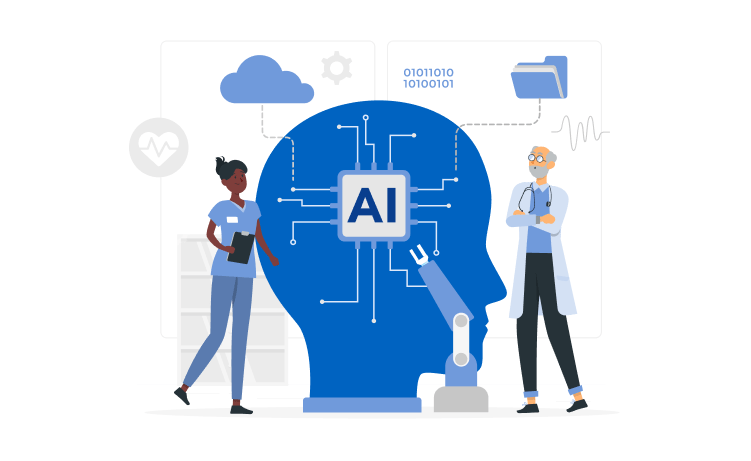
Healthcare: Revolutionizing Patient Care
Early Disease Detection
AI algorithms can analyze vast amounts of medical data to identify patterns and predict disease outbreaks. Early detection systems using AI can spot anomalies in medical images, such as X-rays and MRIs, leading to quicker diagnoses of conditions like cancer and heart disease.
Personalized Treatment Plans
AI helps create personalized treatment plans by analyzing patient data and medical histories. Machine learning models can predict how patients will respond to different treatments, allowing doctors to tailor therapies to individual needs, improving outcomes and reducing side effects.
Virtual Health Assistants
AI-powered virtual health assistants provide patients with 24/7 access to medical information and support. These assistants can answer questions, schedule appointments, and remind patients to take medications, enhancing patient engagement and adherence to treatment plans.
Finance: Enhancing Security and Efficiency
Fraud Detection
AI use cases in finance include advanced fraud detection systems. Machine learning algorithms analyze transaction patterns in real-time, flagging suspicious activities and reducing the risk of financial fraud. This leads to significant cost savings and increased trust in financial institutions.
Algorithmic Trading
AI-driven algorithmic trading systems execute trades at high speeds and frequencies, using historical data and real-time market information. These systems optimize trading strategies, increasing profitability and reducing the emotional and psychological biases that often affect human traders.
Customer Service Chatbots
AI chatbots in the finance sector provide instant customer support, handling inquiries about account balances, transactions, and financial advice. This enhances customer experience by offering quick and accurate responses, freeing human agents to focus on more complex issues.
Retail: Transforming Customer Experiences
Personalized Shopping Experiences
AI use cases in retail include personalized shopping experiences. Machine learning algorithms analyze customer preferences and behaviors, recommending products that match their tastes. This customization boosts customer satisfaction and loyalty.
Inventory Management
AI helps retailers manage inventory more efficiently by predicting demand and optimizing stock levels. Machine learning models analyze sales data, seasonal trends, and other factors to ensure that popular products are always available, reducing the risk of overstocking or stockouts.
Visual Search
Visual search technology allows customers to upload images of products they like and find similar items in the retailer’s catalog. This AI application enhances the shopping experience by making it easier for customers to find exactly what they’re looking for, increasing sales and engagement.
Manufacturing: Boosting Productivity and Quality
Predictive Maintenance
AI use cases in manufacturing include predictive maintenance. Machine learning algorithms analyze data from sensors on machinery to predict when equipment is likely to fail. This allows for timely maintenance, reducing downtime and extending the lifespan of expensive equipment.
Quality Control
AI-powered quality control systems use computer vision to inspect products for defects. These systems can detect flaws that might be missed by human inspectors, ensuring higher quality standards and reducing waste.
Supply Chain Optimization
AI optimizes supply chain operations by analyzing data on production schedules, supplier performance, and transportation logistics. Machine learning models predict potential disruptions and suggest adjustments to minimize delays and costs, ensuring smooth and efficient production processes.
Transportation: Driving Efficiency and Safety
Autonomous Vehicles
One of the most notable AI use cases in transportation is the development of autonomous vehicles. These self-driving cars use AI to navigate, make decisions, and avoid obstacles. Autonomous vehicles have the potential to reduce traffic accidents, improve fuel efficiency, and transform urban mobility.
Traffic Management
AI helps manage traffic flow in cities by analyzing data from traffic cameras, sensors, and GPS devices. Machine learning algorithms predict traffic patterns and adjust traffic light timings to reduce congestion, improve safety, and decrease commute times.
Predictive Maintenance for Public Transport
AI also plays a role in maintaining public transportation systems. Predictive maintenance models analyze data from buses, trains, and other vehicles to forecast when maintenance is needed. This ensures that public transport services run smoothly, reducing delays and improving passenger satisfaction.
Conclusion
AI use cases across major industries demonstrate the transformative power of artificial intelligence. From revolutionizing patient care in healthcare to enhancing security and efficiency in finance, transforming customer experiences in retail, boosting productivity and quality in manufacturing, and driving efficiency and safety in transportation, AI is reshaping the way we live and work. As AI technology continues to advance, its applications will only grow, offering even more innovative solutions to complex challenges.
 Tech blog
Leave a comment