Introduction
In recent years, Artificial Intelligence (AI) has emerged as a transformative force across various industries, and the realm of private equity and principal investment is no exception. As financial markets become increasingly complex and competitive, AI technologies are being leveraged to unlock new opportunities, enhance decision-making processes, and drive efficiencies. This article explores how AI is reshaping the landscape of private equity and principal investment, offering insights into its applications, benefits, and potential future trends.
Understanding AI in Private Equity
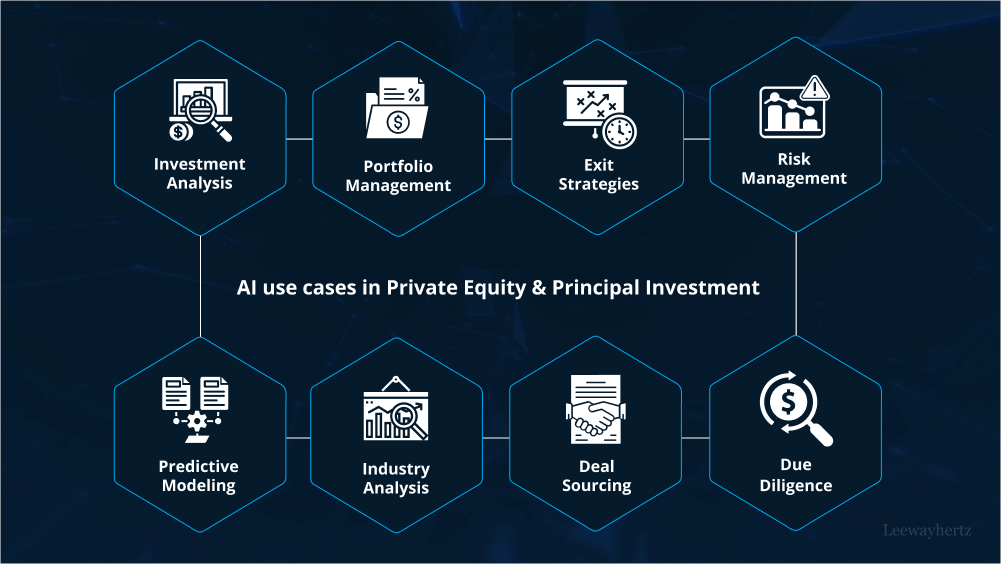
Private equity firms traditionally rely on extensive data analysis and forecasting to identify investment opportunities and manage portfolios. AI augments these capabilities by processing vast amounts of data at unprecedented speeds, extracting valuable insights, and predicting market trends with greater accuracy. Machine learning algorithms, a subset of AI, are particularly instrumental in analyzing historical data to uncover patterns and correlations that human analysts may overlook.
Applications of AI in Principal Investment
Principal investment firms engage in direct investments in companies or assets, often requiring meticulous analysis and due diligence. AI streamlines this process by automating data collection, performing in-depth financial modeling, and conducting risk assessments. Natural Language Processing (NLP) algorithms, for example, enable firms to sift through large volumes of textual data from financial reports, news articles, and social media to gauge market sentiment and assess investment viability.
Enhancing Decision-Making with AI
One of the primary advantages of AI in private equity and principal investment lies in its ability to enhance decision-making processes. By leveraging predictive analytics, AI algorithms can forecast market movements, identify potential risks, and optimize investment strategies in real-time. This proactive approach not only mitigates investment risks but also enhances portfolio performance over the long term.
AI-Driven Due Diligence
Due diligence is a critical phase in both private equity and principal investment, where thorough analysis of financial, operational, and market data determines the feasibility of an investment. AI-powered tools accelerate this process by automating data verification, identifying discrepancies, and providing comprehensive insights into target companies or assets. This not only reduces the time required for due diligence but also improves the accuracy of investment assessments.
Risk Management and Compliance
AI technologies play a pivotal role in enhancing risk management frameworks within private equity and principal investment firms. By continuously monitoring market trends and regulatory changes, AI-powered systems can identify potential compliance issues and deviations from investment mandates in real-time. This proactive risk management approach ensures that firms adhere to regulatory guidelines while optimizing investment performance.
Operational Efficiency and Cost Savings
Beyond decision-making and risk management, AI contributes to operational efficiency within private equity and principal investment firms. Tasks such as portfolio management, performance tracking, and investor reporting can be automated through AI-driven platforms, allowing investment professionals to focus on strategic initiatives and client relationships. This not only reduces operational costs but also improves overall productivity across the organization.
Challenges and Considerations
Despite its transformative potential, the adoption of AI in private equity and principal investment is not without challenges. Data privacy concerns, the need for specialized AI talent, and the integration of AI systems with existing infrastructure are some of the key considerations for firms exploring AI solutions. Moreover, maintaining transparency and accountability in AI-driven decision-making processes remains crucial to building trust among stakeholders.
Future Trends in AI Adoption
Looking ahead, the future of AI in private equity and principal investment appears promising. Advances in AI technology, including the development of explainable AI models and enhanced predictive analytics capabilities, will further empower investment professionals to make informed decisions and capitalize on emerging market opportunities. Additionally, the integration of AI with other cutting-edge technologies such as blockchain and quantum computing holds the potential to redefine investment strategies and portfolio management practices.
Conclusion
In conclusion, AI is revolutionizing the landscape of private equity and principal investment by augmenting decision-making processes, enhancing operational efficiency, and optimizing risk management frameworks. As firms continue to embrace AI-driven solutions, they are better positioned to navigate complex market dynamics, capitalize on investment opportunities, and deliver superior returns to their stakeholders. By leveraging the transformative power of AI, private equity and principal investment firms can unlock new avenues for growth and innovation in the evolving global economy.
 Tech blog
Leave a comment