Introduction
Generative AI has revolutionized various industries by enabling machines to exhibit creativity and produce content autonomously. This article explores the components of the Generative AI tech stack, highlighting its key elements and their roles in powering innovation.
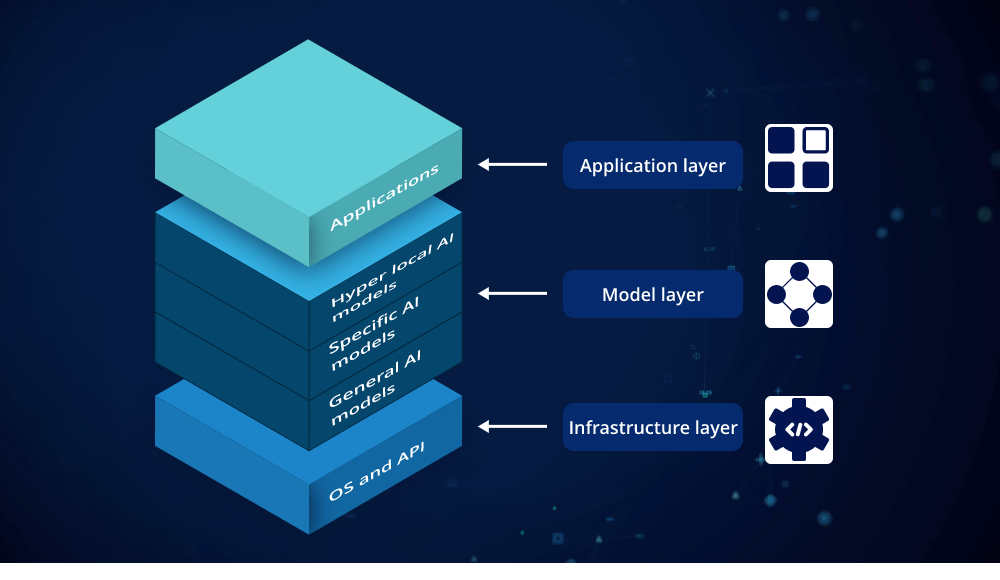
What is the Generative AI Tech Stack?
The Generative AI tech stack refers to the framework of technologies and tools used to develop and deploy generative AI models. These models are designed to generate new content, such as images, text, music, and even entire videos, based on patterns learned from vast amounts of data.
Components of the Generative AI Tech Stack
- Machine Learning Frameworks At the core of the Generative AI tech stack are machine learning frameworks like TensorFlow, PyTorch, and JAX. These frameworks provide the foundational tools for building and training generative models. They offer libraries and APIs that streamline the implementation of complex algorithms and neural networks, crucial for generating realistic and innovative outputs.
- Generative Models Generative models, such as Generative Adversarial Networks (GANs), Variational Autoencoders (VAEs), and Transformer models like GPT (Generative Pre-trained Transformer), are central to the tech stack. GANs, for example, pit two neural networks against each other to improve the authenticity of generated content, while VAEs focus on learning latent representations of data to generate new instances.
- Natural Language Processing (NLP) Tools For text generation tasks, NLP tools and libraries play a pivotal role. Models like GPT-3 have demonstrated remarkable capabilities in generating coherent and contextually relevant text. These tools integrate advanced language models trained on vast corpora of text data, enabling applications in content creation, translation, and conversational agents.
- Computer Vision Libraries Computer vision libraries such as OpenCV and torchvision are essential for generating and processing images and videos. They provide pre-trained models, image processing algorithms, and utilities for manipulating visual data. Generative models leveraging these libraries can create photorealistic images, alter visual styles, and even synthesize new scenes.
- Deployment and Scalability Deploying generative AI models at scale requires robust infrastructure and cloud computing services. Platforms like AWS, Google Cloud, and Microsoft Azure offer scalable solutions for hosting and managing AI applications. They provide GPU instances optimized for deep learning tasks, ensuring efficient model training and real-time inference.
Applications of the Generative AI Tech Stack
The versatility of the Generative AI tech stack enables its application across various domains:
- Content Creation: Artists and designers use generative models to produce original artworks, designs, and animations.
- Personalization: E-commerce platforms utilize recommendation engines powered by generative AI to tailor product suggestions based on user preferences.
- Healthcare: Generative models assist in medical imaging analysis, drug discovery, and personalized treatment plans.
- Entertainment: Filmmakers and game developers employ AI-generated content for special effects, virtual environments, and interactive storytelling.
Challenges and Future Directions
While the Generative AI tech stack continues to advance rapidly, several challenges remain:
- Ethical Considerations: Issues surrounding bias, privacy, and misuse of AI-generated content require careful consideration and regulation.
- Interpretability: Understanding how generative models arrive at their outputs remains a challenge, hindering trust and transparency.
- Data Quality and Diversity: Models heavily rely on the quality and diversity of training data, necessitating efforts to mitigate biases and improve dataset inclusivity.
Looking ahead, future advancements in the Generative AI tech stack are poised to enhance creativity, automation, and personalization across industries. Research focuses on improving model efficiency, scalability, and interpretability to unlock new possibilities in AI-driven innovation.
Conclusion
The Generative AI tech stack represents a powerful toolkit for creating and deploying AI models capable of generating diverse forms of content autonomously. By leveraging machine learning frameworks, generative models, and specialized libraries, developers and researchers are pioneering new applications and pushing the boundaries of what AI can achieve. As technologies evolve and challenges are addressed, the impact of generative AI on society is set to grow, transforming industries and fostering new opportunities for innovation and creativity.
 Tech blog
Leave a comment