Introduction
Artificial Intelligence (AI) is transforming industries worldwide, and healthcare is no exception. The integration of AI agents in healthcare has introduced a new era of efficiency, accuracy, and patient-centered care. This article explores how AI agents are revolutionizing healthcare, enhancing diagnostic processes, improving patient management, and streamlining administrative tasks.
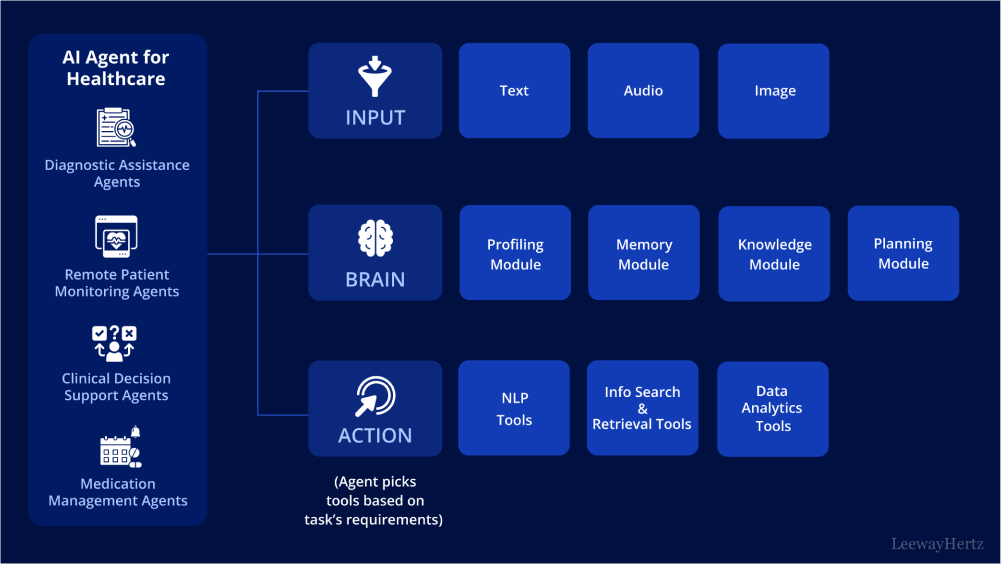
What Are AI Agents?
AI agents are software programs that perform tasks autonomously using AI technologies such as machine learning, natural language processing (NLP), and robotics. In healthcare, these agents can analyze large volumes of data, recognize patterns, and make decisions or recommendations based on that data. They act as assistants to healthcare professionals, providing support in various aspects of medical care.
Enhancing Diagnostic Accuracy
One of the most significant contributions of AI agents in healthcare is improving diagnostic accuracy. AI algorithms can process vast amounts of medical data, including patient records, lab results, and medical images, to identify patterns that might be missed by human eyes.
For instance, AI agents can analyze radiology images to detect anomalies such as tumors or fractures. Studies have shown that AI can match or even surpass human radiologists in identifying certain conditions. This collaboration between AI and human experts leads to quicker and more accurate diagnoses, ultimately improving patient outcomes.
Personalized Treatment Plans
AI agents are also instrumental in creating personalized treatment plans. By analyzing patient data, including genetic information, lifestyle factors, and treatment history, AI can help develop tailored treatment strategies. This personalized approach ensures that patients receive the most effective treatments with minimal side effects.
For example, in oncology, AI can help oncologists determine the most effective chemotherapy regimen based on a patient’s unique genetic profile and the characteristics of their cancer. This precision medicine approach enhances the likelihood of successful treatment and reduces unnecessary interventions.
Streamlining Administrative Tasks
Healthcare systems often struggle with administrative burdens, from scheduling appointments to managing patient records. AI agents can automate many of these tasks, freeing up healthcare professionals to focus on patient care.
AI-powered chatbots and virtual assistants can handle appointment scheduling, answer patient queries, and provide reminders for medication or follow-up visits. These AI agents are available 24/7, providing timely assistance and reducing the workload on healthcare staff.
Additionally, AI agents can streamline the management of electronic health records (EHRs). They can quickly retrieve patient information, update records in real-time, and ensure that data is accurate and up-to-date. This efficiency reduces the risk of errors and enhances the overall quality of care.
Predictive Analytics for Proactive Care
Predictive analytics is another area where AI agents are making a significant impact. By analyzing historical and real-time data, AI can predict potential health issues before they become critical. This proactive approach allows for early interventions, which can prevent complications and improve patient outcomes.
For instance, AI agents can monitor patients with chronic conditions such as diabetes or heart disease. By continuously analyzing data from wearable devices, AI can detect signs of deterioration and alert healthcare providers to take preemptive action. This continuous monitoring ensures that patients receive timely care, reducing hospital admissions and healthcare costs.
Improving Patient Engagement
AI agents also play a crucial role in enhancing patient engagement. They can provide patients with personalized health information, answer questions, and offer guidance on managing their health. This empowerment helps patients take an active role in their healthcare journey.
For example, AI-powered mobile apps can provide patients with educational resources about their condition, medication reminders, and tips for maintaining a healthy lifestyle. These tools foster a sense of ownership and responsibility, encouraging patients to adhere to treatment plans and make informed decisions about their health.
Conclusion
AI agents are revolutionizing healthcare by enhancing diagnostic accuracy, personalizing treatment plans, streamlining administrative tasks, and improving patient engagement. While challenges and ethical considerations remain, the potential benefits of AI in healthcare are immense. As technology continues to advance, AI agents will undoubtedly play an increasingly vital role in delivering high-quality, patient-centered care.
 Tech blog
Leave a comment