Introduction
In the fast-paced world of modern business, due diligence has emerged as a crucial component in making informed decisions, particularly in mergers and acquisitions (M&A), investment evaluations, and compliance. Traditionally, due diligence involves a thorough investigation and evaluation of a potential investment or product, but this process is often time-consuming and prone to human error. Enter AI for due diligence—a game-changer that promises to revolutionize how businesses conduct these critical assessments.
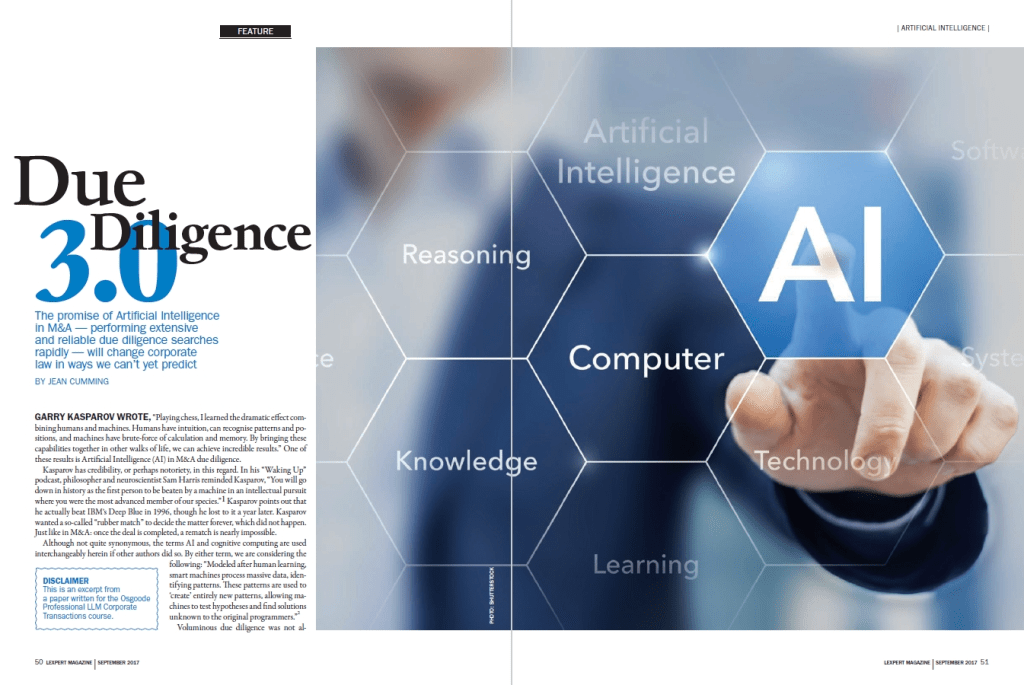
What is AI for Due Diligence?
AI for due diligence refers to the use of artificial intelligence technologies to automate and enhance the processes involved in evaluating the viability, risks, and benefits of a potential business deal or investment. This includes the analysis of financial records, legal documents, market data, and more. By leveraging machine learning, natural language processing (NLP), and data analytics, AI can streamline and significantly improve the accuracy of due diligence.
The Benefits of AI for Due Diligence
- Efficiency and Speed
One of the most compelling advantages of AI for due diligence is its ability to process vast amounts of data quickly. Where traditional methods might take weeks or even months, AI systems can analyze large datasets in a matter of hours or days. This acceleration not only saves time but also allows businesses to capitalize on opportunities more rapidly.
- Improved Accuracy
Human error is an inherent risk in manual due diligence processes. AI, on the other hand, can minimize these errors by consistently applying the same criteria and logic to data analysis. Advanced algorithms can detect anomalies and patterns that might be overlooked by human analysts, leading to more accurate assessments.
- Comprehensive Analysis
AI for due diligence can handle a wide array of data types, including structured data like financial statements and unstructured data like emails and contracts. Natural language processing enables AI to understand and analyze text-based information, providing a more holistic view of the subject under review.
- Cost Reduction
By automating much of the due diligence process, AI reduces the need for extensive human labor, leading to significant cost savings. Businesses can allocate their resources more efficiently, focusing human expertise on interpreting AI-generated insights rather than gathering and sifting through data.
Applications of AI in Due Diligence
- Financial Due Diligence
AI can analyze financial statements, transaction histories, and economic indicators to assess the financial health and performance of a company. Machine learning algorithms can predict future financial trends based on historical data, providing investors with valuable insights.
- Legal Due Diligence
Natural language processing enables AI to review legal documents, contracts, and compliance records. AI can identify potential legal risks, flag non-compliance issues, and even suggest amendments to contractual terms. This ensures that all legal aspects of a transaction are thoroughly vetted.
- Market and Competitor Analysis
AI tools can gather and analyze market data, competitor performance, and industry trends. This information is crucial for understanding the market position of a target company and its growth potential. AI can provide real-time updates and forecasts, helping businesses make informed strategic decisions.
- Operational Due Diligence
AI can evaluate a company’s operational efficiency by analyzing supply chain data, production processes, and workforce management. This helps identify potential operational risks and opportunities for improvement, ensuring that the business can sustain its operations post-acquisition or investment.
Conclusion
AI for due diligence represents a significant advancement in the way businesses evaluate potential deals and investments. By enhancing efficiency, accuracy, and comprehensiveness, AI is transforming due diligence into a faster, more reliable, and cost-effective process. However, businesses must navigate challenges related to data quality, system integration, and regulatory compliance to fully realize the benefits. As AI technology continues to evolve, its role in due diligence is set to become even more pivotal, enabling businesses to make smarter, more informed decisions in an increasingly competitive landscape.
 Tech blog
Leave a comment