The healthcare industry is undergoing a significant transformation with the integration of artificial intelligence (AI). This technology is redefining the way medical professionals diagnose, treat, and manage diseases, offering a myriad of benefits that improve patient care and streamline operations.
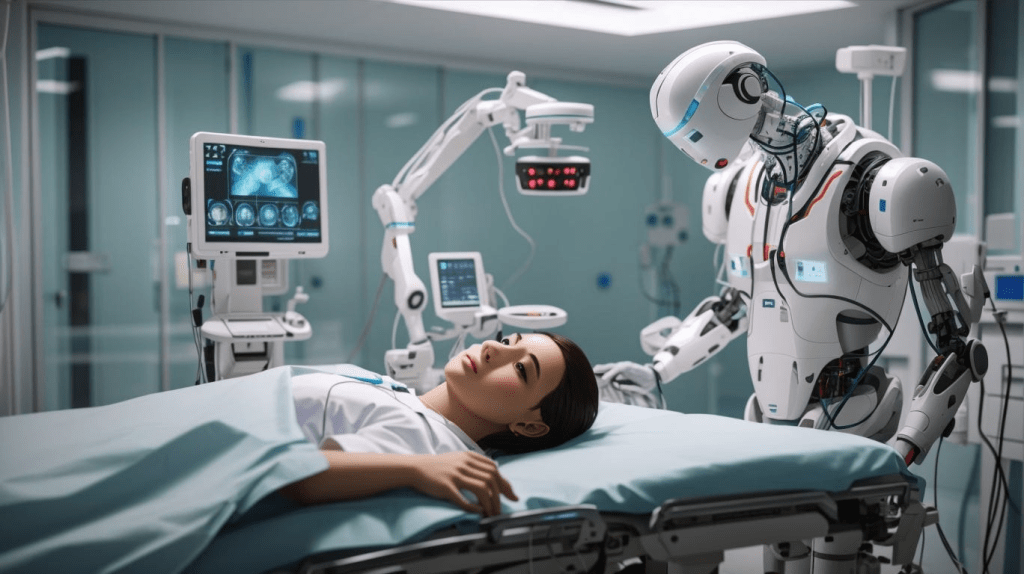
Enhancing Diagnostic Accuracy
One of the most promising applications of AI in healthcare is in diagnostics. Traditional diagnostic methods rely heavily on the expertise and experience of medical professionals. However, AI-powered systems can analyze vast amounts of data from medical records, imaging studies, and genetic information to identify patterns and anomalies that might be overlooked by human eyes.
For instance, AI algorithms have demonstrated remarkable accuracy in detecting cancers from radiographic images. These systems can compare a patient’s scans with millions of others in a matter of seconds, highlighting potential areas of concern with high precision. This not only speeds up the diagnostic process but also significantly improves accuracy, leading to earlier and more effective treatments.
Personalizing Treatment Plans
AI in healthcare is also instrumental in creating personalized treatment plans. Every patient is unique, and so are their responses to treatments. AI systems can analyze data from previous cases, clinical trials, and medical literature to recommend treatment plans tailored to an individual’s genetic makeup, lifestyle, and other factors.
For example, in oncology, AI can help oncologists design personalized treatment protocols based on the specific genetic mutations present in a patient’s tumor. This targeted approach increases the likelihood of treatment success and reduces the risk of adverse effects, enhancing the overall quality of care.
Streamlining Administrative Tasks
Beyond clinical applications, AI is revolutionizing administrative tasks in healthcare. Hospitals and clinics often struggle with the burden of paperwork and administrative duties, which can detract from patient care. AI-powered systems can automate routine tasks such as scheduling appointments, managing patient records, and processing insurance claims.
Natural language processing (NLP) technologies, a subset of AI, are particularly useful in transcribing and organizing clinical notes. This allows healthcare providers to spend more time with patients and less time on documentation. Furthermore, AI can predict patient admissions and optimize staffing schedules, ensuring that healthcare facilities are adequately staffed to meet patient needs.
Improving Patient Monitoring and Care
AI in healthcare extends to patient monitoring and care management. Wearable devices equipped with AI can continuously monitor vital signs such as heart rate, blood pressure, and glucose levels. These devices can alert healthcare providers to any significant changes, enabling timely interventions.
For chronic disease management, AI can analyze data from these devices to track disease progression and predict potential complications. For instance, AI algorithms can identify patterns in glucose readings that indicate a risk of hypoglycemia in diabetic patients, prompting early interventions to prevent serious health issues.
Advancing Drug Discovery and Development
The pharmaceutical industry is also benefiting from AI in healthcare, particularly in drug discovery and development. Traditional drug development processes are time-consuming and costly, often taking years and billions of dollars to bring a new drug to market. AI can significantly accelerate this process by analyzing biological data and predicting how different compounds will interact with targets in the body.
Machine learning algorithms can sift through vast datasets to identify potential drug candidates, optimizing the selection process. Additionally, AI can help design and run clinical trials more efficiently, identifying suitable participants and predicting outcomes, thus speeding up the development of new treatments.
Addressing Ethical and Privacy Concerns
While the benefits of AI in healthcare are substantial, it is important to address the ethical and privacy concerns associated with its use. Ensuring patient data confidentiality and security is paramount. AI systems must comply with strict regulations and standards to protect sensitive information.
Moreover, there is a need for transparency in AI algorithms to prevent biases and ensure fairness in healthcare. Developers must ensure that AI systems are trained on diverse datasets and that their decision-making processes are understandable and explainable to healthcare providers and patients alike.
The Future of AI in Healthcare
The future of AI in healthcare is bright, with continued advancements poised to further revolutionize the industry. As AI technology evolves, it will become even more integral to healthcare delivery, driving innovations that improve patient outcomes and operational efficiency.
AI-powered telemedicine platforms are already expanding access to healthcare, particularly in remote and underserved areas. These platforms enable virtual consultations, remote monitoring, and personalized care, bridging the gap between patients and healthcare providers.
Moreover, AI’s potential in genomics and precision medicine is set to unlock new frontiers in understanding and treating diseases at the molecular level. By integrating AI with cutting-edge technologies like CRISPR, scientists can develop groundbreaking therapies that target the root causes of diseases.
In conclusion, AI in healthcare is not just a trend but a transformative force that is reshaping the medical landscape. From enhancing diagnostic accuracy to personalizing treatment plans, streamlining administrative tasks, improving patient monitoring, and advancing drug discovery, AI is revolutionizing healthcare in unprecedented ways. As we navigate the ethical and privacy challenges, the continued integration of AI promises a future where healthcare is more efficient, effective, and accessible for all.
 Tech blog
Leave a comment