In today’s rapidly evolving digital landscape, the role of Generative AI in knowledge management is increasingly pivotal. As organizations grapple with vast amounts of information, the ability to harness and utilize this data effectively can mean the difference between stagnation and innovation. Generative AI, with its capacity to understand, generate, and refine information autonomously, offers a transformative solution to these challenges. This article explores how Generative AI is revolutionizing knowledge management, enhancing efficiency, and fostering innovation across various sectors.
Understanding Generative AI in Knowledge Management
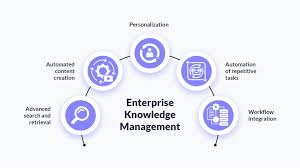
Generative AI refers to a subset of artificial intelligence that focuses on creating new content based on patterns learned from vast datasets. Unlike traditional AI models that are designed for specific tasks, generative models like GPT (Generative Pre-trained Transformer) are capable of generating human-like text, images, and even code. In the realm of knowledge management, this capability is invaluable as it enables organizations to automate content creation, streamline documentation processes, and extract insights from complex data sets.
Streamlining Content Creation and Documentation
One of the most significant applications of Generative AI in knowledge management is in content creation and documentation. Organizations often struggle with creating and updating large volumes of content, ranging from manuals and reports to customer support documents. Generative AI can automate these processes by generating coherent and relevant text based on input prompts or existing data. This not only saves time and resources but also ensures consistency and accuracy across all content outputs.
Enhancing Decision-Making with Intelligent Insights
Beyond content creation, Generative AI can analyze and interpret vast amounts of unstructured data to extract meaningful insights. By processing diverse sources of information, such as customer feedback, market trends, and research papers, AI models can uncover patterns and correlations that human analysts might overlook. These insights empower decision-makers to make data-driven decisions swiftly, thereby increasing organizational agility and competitiveness in dynamic markets.
Facilitating Continuous Learning and Adaptation
Knowledge management is inherently about learning and adapting to new information. Generative AI plays a crucial role in facilitating this process by continuously updating its understanding of data and generating new knowledge. For example, AI-powered knowledge bases can evolve in real-time based on user interactions and feedback, ensuring that the information remains relevant and up-to-date. This adaptive capability is particularly valuable in industries where regulatory requirements or technological advancements necessitate rapid knowledge dissemination and updates.
Improving Customer Experience and Engagement
In the realm of customer service and support, Generative AI can enhance the overall experience by providing timely and accurate responses to queries. Chatbots powered by AI can engage with customers in natural language, offering personalized recommendations and troubleshooting assistance. This not only improves customer satisfaction but also reduces response times and operational costs for organizations handling large volumes of customer inquiries.
Overcoming Challenges and Ethical Considerations
Despite its transformative potential, the adoption of Generative AI in knowledge management comes with its own set of challenges and ethical considerations. Privacy concerns, data security, and the ethical use of AI-generated content are paramount issues that organizations must address. Ensuring transparency in AI operations and implementing robust data governance frameworks are essential steps towards building trust and mitigating risks associated with AI-driven knowledge management systems.
Future Trends and Innovations
Looking ahead, the future of Generative AI in knowledge management promises even greater advancements. As AI models become more sophisticated and capable of understanding context and nuance, they will enable deeper insights and more personalized interactions. Innovations such as AI-driven creativity, where machines assist in ideation and innovation processes, are already being explored in various creative industries.
Conclusion
Generative AI represents a paradigm shift in how organizations manage and leverage knowledge. By automating content creation, extracting insights, and enhancing decision-making processes, AI-driven knowledge management systems not only improve efficiency but also foster innovation and competitiveness. However, as with any transformative technology, careful consideration of ethical implications and proactive management of risks are essential for realizing the full potential of Generative AI in knowledge management. As organizations navigate this evolving landscape, those embracing Generative AI stand to gain a significant competitive advantage in the digital era.
 Tech blog
Leave a comment