Introduction
In recent years, artificial intelligence (AI) has revolutionized various industries, and one of the most profound impacts has been in lending. AI’s ability to analyze vast amounts of data quickly and accurately has transformed the way financial institutions assess creditworthiness, manage risk, and personalize financial services. This article explores the role of AI in lending, its benefits, challenges, and the future implications for borrowers and lenders alike.
Understanding AI in Lending
AI in lending refers to the use of machine learning algorithms and predictive analytics to streamline the loan approval process. Traditionally, lenders relied heavily on credit scores and historical data to make lending decisions. However, AI augments this process by analyzing alternative data sources such as social media profiles, transaction history, and even smartphone data to provide a more comprehensive view of an individual’s financial behavior and creditworthiness.
Benefits of AI in Lending
- Improved Accuracy and Efficiency AI algorithms can analyze large volumes of data in real-time, enabling lenders to make quicker and more accurate lending decisions. This efficiency not only reduces the time taken to process loan applications but also minimizes the risk of human error in decision-making.
- Enhanced Risk Management By leveraging AI-powered predictive analytics, lenders can better assess the risk associated with each borrower. Machine learning models can identify patterns and trends in data that human analysts may overlook, thereby improving the overall risk management framework of financial institutions.
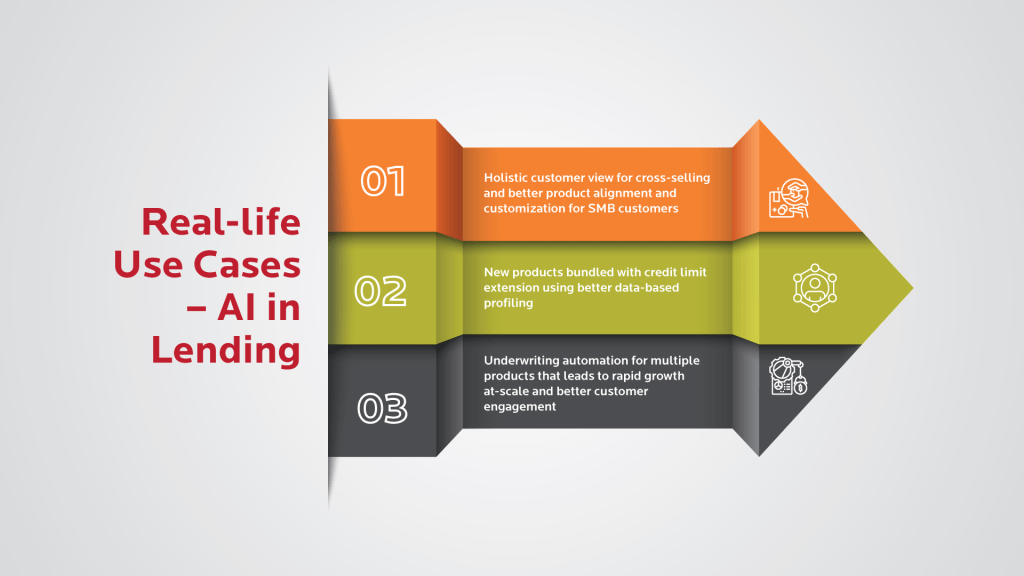
- Personalized Financial Products AI enables lenders to offer personalized financial products tailored to the specific needs of individual borrowers. By analyzing data on spending habits, income patterns, and credit history, AI algorithms can recommend suitable loan products with terms and conditions that are most likely to be accepted and repaid by the borrower.
Challenges and Considerations
While AI brings significant advantages to the lending industry, it also presents several challenges and considerations:
- Bias and Fairness AI algorithms are only as unbiased as the data used to train them. If historical data contains biases, such as racial or gender discrimination, AI models may perpetuate these biases, resulting in unfair lending practices. Addressing this challenge requires careful data selection and ongoing monitoring of AI models to ensure fairness and compliance with regulatory standards.
- Data Privacy and Security The use of alternative data sources in AI-driven lending raises concerns about data privacy and security. Financial institutions must adhere to strict regulations and industry standards to protect borrower information from unauthorized access and data breaches.
- Transparency and Accountability AI algorithms can be complex and opaque, making it difficult to understand the factors influencing lending decisions. Ensuring transparency and accountability in AI-driven lending requires clear documentation of algorithmic processes and regular audits to verify compliance with regulatory guidelines.
The Future of AI in Lending
Looking ahead, AI is poised to further transform the lending landscape:
- Expansion of Financial Inclusion AI has the potential to expand access to finance for underserved populations by providing alternative credit scoring models that assess creditworthiness based on non-traditional data points. This can help bridge the gap between traditional banking services and unbanked or underbanked individuals.
- Continued Innovation As AI technology evolves, so too will its applications in lending. Future innovations may include real-time credit assessments, automated loan servicing, and AI-powered financial advisory services that help borrowers make informed financial decisions.
- Regulatory Evolution Regulators are increasingly focusing on the ethical and legal implications of AI in lending. Future regulatory frameworks are likely to emphasize fairness, transparency, and consumer protection, while also fostering innovation and competition in the financial services sector.
Conclusion
AI in lending represents a paradigm shift in how financial institutions evaluate credit risk, personalize financial products, and enhance operational efficiency. While there are challenges to overcome, such as bias and data privacy concerns, the potential benefits of AI in lending are undeniable. As technology continues to advance, the future promises a more inclusive and efficient financial ecosystem where access to finance is democratized and personalized to meet the diverse needs of borrowers worldwide.
 Tech blog
Leave a comment