Introduction
In today’s rapidly evolving technological landscape, artificial intelligence (AI) plays a pivotal role in transforming various sectors, particularly in decision making. AI technologies have revolutionized how organizations and individuals approach decision-making processes, offering unprecedented capabilities to analyze vast amounts of data swiftly and accurately. This article explores the significant impact of AI in decision making, highlighting its benefits, challenges, and future implications.
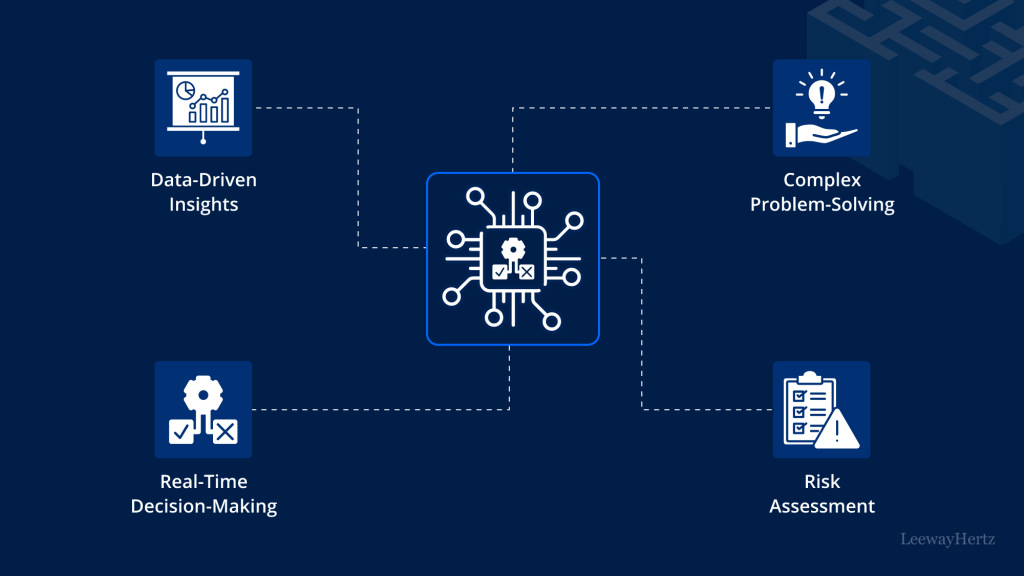
Understanding AI in Decision Making
Artificial intelligence refers to the simulation of human intelligence processes by machines, especially computer systems. AI in decision making, are designed to process data, recognize patterns, and generate insights to support informed decision-making processes. Unlike traditional methods that rely heavily on human judgment, AI offers a data-driven approach that enhances precision and efficiency.
Benefits of AI in Decision Making
- Data Processing and Analysis AI excels in processing and analyzing large volumes of data at speeds far beyond human capability. This capability enables organizations to extract valuable insights and trends from complex datasets that would otherwise be challenging to interpret manually. For example, in financial trading, AI algorithms can analyze market trends in real-time and make split-second decisions to optimize investment strategies.
- Predictive Analytics AI-powered predictive analytics models leverage historical data to forecast future outcomes with a high degree of accuracy. This capability is invaluable across various industries, including healthcare, where AI can predict patient outcomes based on medical records and genetic data, assisting clinicians in making informed treatment decisions.
- Decision Support Systems AI-driven decision support systems provide decision-makers with relevant information and recommendations based on data analysis. These systems help mitigate human bias and error by presenting objective insights, thereby improving the quality and reliability of decisions made in fields such as logistics, supply chain management, and marketing.
Challenges and Considerations
While AI offers significant advantages in decision making, several challenges and considerations must be addressed:
- Ethical Implications AI algorithms rely on data inputs, which may inadvertently perpetuate biases present in the data. Addressing these biases requires careful algorithm design and ongoing monitoring to ensure fairness and equity in decision outcomes.
- Data Privacy and Security Handling large datasets raises concerns about data privacy and security. Organizations must implement robust cybersecurity measures to protect sensitive information from unauthorized access or breaches.
- Integration and Adoption Adopting AI technologies often requires significant investment in infrastructure, training, and organizational change management. Ensuring seamless integration with existing systems and processes is crucial for maximizing the benefits of AI in decision making.
Future Directions
The future of AI in decision making holds promising advancements and innovations:
- Advancements in AI Algorithms Ongoing research and development in AI algorithms, such as deep learning and reinforcement learning, are expected to enhance the accuracy and capabilities of decision-making systems across diverse applications.
- Human-AI Collaboration The evolution towards human-AI collaboration aims to combine the strengths of AI in data processing and pattern recognition with human creativity, intuition, and ethical judgment. This synergy can lead to more holistic and informed decision-making processes.
- AI in Personalization AI-driven personalization algorithms will continue to refine customer experiences by delivering tailored recommendations and services based on individual preferences and behaviors, further optimizing decision-making outcomes in retail, e-commerce, and entertainment sectors.
Conclusion
In conclusion, AI has emerged as a transformative force in decision making, offering unparalleled capabilities to process data, predict outcomes, and support informed decision-making processes across various sectors. While AI presents numerous benefits, it also brings forth challenges that require careful consideration and proactive measures. Looking ahead, continued advancements in AI technologies hold the promise of further enhancing decision-making precision, efficiency, and overall societal impact.
By harnessing the power of AI responsibly and ethically, organizations and societies can leverage its potential to navigate complexities, drive innovation, and achieve sustainable growth in the digital era.
 Tech blog
Leave a comment