Introduction
In recent years, the integration of Artificial Intelligence (AI) in portfolio management has revolutionized the investment landscape. AI’s ability to analyze vast amounts of data, identify patterns, and make predictions is enhancing decision-making processes, enabling more efficient and effective management of investment portfolios. This article explores the transformative impact of AI in portfolio management, its benefits, challenges, and future prospects.
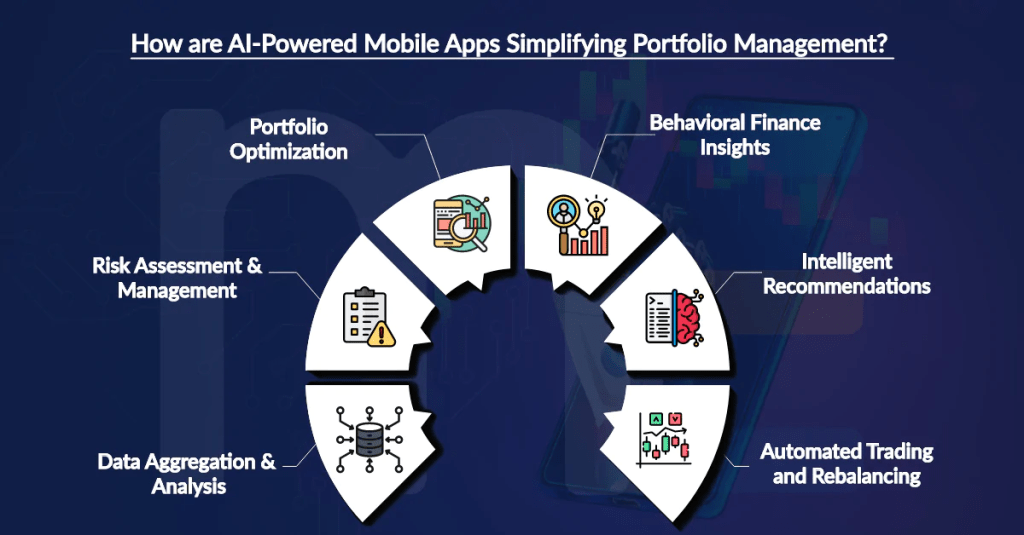
1. The Role of AI in Portfolio Management
AI in portfolio management involves using advanced algorithms and machine learning models to optimize investment strategies. These technologies can process enormous datasets at high speeds, providing insights that human analysts might miss. AI applications in portfolio management range from risk assessment and asset allocation to performance monitoring and rebalancing portfolios.
Data Analysis and Pattern Recognition
One of the primary advantages of AI in portfolio management is its ability to analyze large datasets quickly and accurately. AI algorithms can sift through historical data, market trends, and economic indicators to identify patterns that inform investment decisions. This capability allows portfolio managers to make data-driven decisions, reducing reliance on intuition and experience alone.
Predictive Analytics
AI-driven predictive analytics can forecast future market movements by analyzing past trends and current conditions. These predictions help portfolio managers anticipate changes and adjust their strategies accordingly. For example, AI can predict stock price movements, identify potential market downturns, and suggest optimal times for buying or selling assets.
2. Benefits of AI in Portfolio Management
The incorporation of AI in portfolio management offers several key benefits that enhance the overall investment process.
Improved Efficiency and Speed
AI systems can process and analyze data at a speed far surpassing human capabilities. This increased efficiency allows for real-time analysis and decision-making, enabling portfolio managers to respond swiftly to market changes. As a result, investment strategies can be executed more quickly and accurately.
Enhanced Risk Management
AI can identify and assess risks more effectively than traditional methods. By analyzing various risk factors and their potential impacts, AI algorithms can provide a comprehensive risk profile for each investment. This information helps portfolio managers make informed decisions to mitigate risks and optimize returns.
Cost Reduction
Automation of data analysis and decision-making processes reduces the need for extensive human intervention, lowering operational costs. AI-driven portfolio management systems can handle routine tasks, such as monitoring portfolio performance and rebalancing, freeing up human resources for more strategic activities.
Personalization
AI enables the creation of personalized investment strategies tailored to individual investor profiles. By analyzing an investor’s risk tolerance, financial goals, and investment horizon, AI can recommend customized portfolios that align with their specific needs and preferences.
3. Challenges of AI in Portfolio Management
Despite its numerous benefits, the integration of AI in portfolio management also presents several challenges.
Data Quality and Availability
AI’s effectiveness is highly dependent on the quality and availability of data. Incomplete, inaccurate, or outdated data can lead to erroneous predictions and suboptimal investment decisions. Ensuring access to high-quality, real-time data is crucial for the success of AI-driven portfolio management.
Complexity and Transparency
AI algorithms are often complex and can be difficult to understand, even for experienced professionals. This lack of transparency can create trust issues, as investors may be hesitant to rely on “black box” systems that do not provide clear explanations for their decisions.
Regulatory and Ethical Considerations
The use of AI in portfolio management raises regulatory and ethical concerns. Regulatory frameworks need to adapt to address issues such as data privacy, algorithmic bias, and accountability. Ensuring that AI systems operate within legal and ethical boundaries is essential to maintain investor trust and confidence.
4. The Future of AI in Portfolio Management
The future of AI in portfolio management looks promising, with ongoing advancements in technology and data analytics poised to further enhance investment strategies.
Integration with Big Data and IoT
The integration of AI with Big Data and the Internet of Things (IoT) will provide portfolio managers with even richer datasets to analyze. Real-time data from various sources, such as social media, economic indicators, and market transactions, will enable more accurate predictions and timely decision-making.
Enhanced Human-AI Collaboration
While AI will continue to play a significant role in portfolio management, the human element will remain crucial. Enhanced collaboration between human analysts and AI systems will combine the strengths of both, leading to more robust and innovative investment strategies.
Continuous Learning and Adaptation
AI systems will continue to evolve and improve through continuous learning and adaptation. Machine learning algorithms can update themselves based on new data and changing market conditions, ensuring that portfolio management strategies remain relevant and effective over time.
Conclusion
AI in portfolio management is transforming the way investments are managed, offering numerous benefits such as improved efficiency, enhanced risk management, cost reduction, and personalized investment strategies. However, challenges related to data quality, complexity, and regulatory considerations must be addressed to fully harness AI’s potential. As technology advances and human-AI collaboration deepens, the future of portfolio management looks bright, promising more informed and effective investment decisions.
 Tech blog
Leave a comment