Introduction
In the ever-evolving landscape of business analytics, the concept of Customer Lifetime Value (LTV) stands as a crucial metric for organizations aiming to build lasting relationships with their customers. With the advent of artificial intelligence (AI), LTV prediction models have undergone a transformative journey, leveraging advanced machine learning techniques to unlock new dimensions in customer value assessment. This article explores the symbiotic relationship between AI and LTV models, examining the use cases, benefits, and the role of machine learning in shaping the future of customer value prediction.
Understanding LTV Prediction Models
- Foundations of LTV Models
LTV prediction models are designed to estimate the total revenue a business can expect from a customer throughout their entire relationship. Traditional models often rely on historical data, transactional behavior, and basic demographic information to make predictions. However, the introduction of AI has elevated these models to a new level of accuracy and sophistication.
- Machine Learning in LTV Prediction
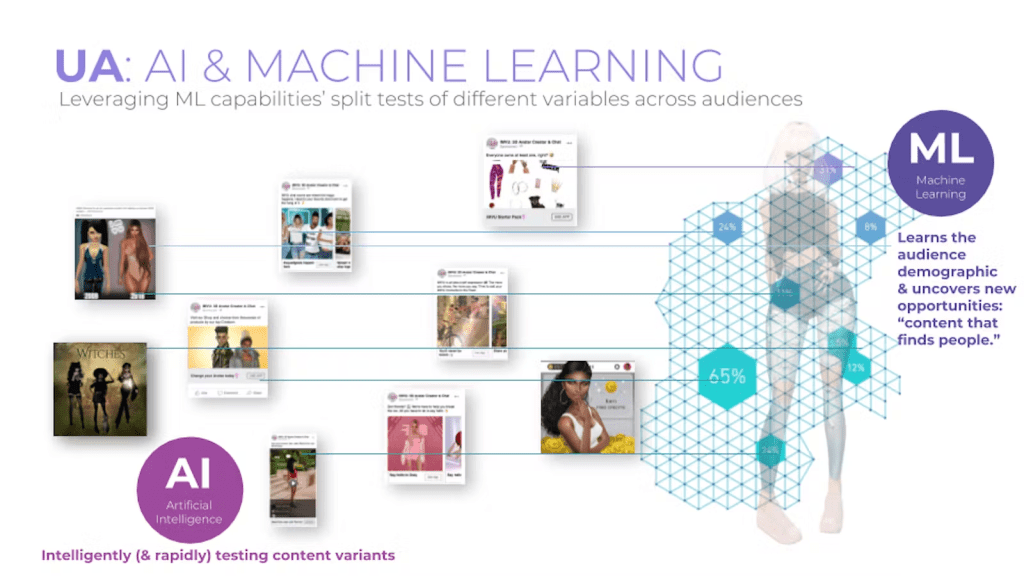
AI, particularly machine learning algorithms, plays a pivotal role in enhancing the predictive capabilities of LTV models. These algorithms sift through vast datasets, identifying patterns, correlations, and hidden insights that traditional models might overlook. By continuously learning from new data, machine learning models adapt to changing customer behaviors, providing more accurate and dynamic LTV predictions.
AI Use Cases in LTV Models
- Predictive Analytics for LTV Optimization
AI-driven predictive analytics enable businesses to forecast customer behavior with unprecedented accuracy. By analyzing past interactions, purchase history, and engagement patterns, machine learning models can predict future customer actions. This foresight empowers organizations to optimize marketing strategies, tailor product offerings, and personalize customer experiences, ultimately maximizing LTV.
- Segmentation for Targeted Campaigns
AI excels in customer segmentation, allowing businesses to categorize their audience based on various parameters such as spending habits, engagement levels, and preferences. By fine-tuning marketing efforts for each segment, organizations can effectively boost customer retention and loyalty, directly impacting LTV.
- Personalized Recommendations with AI
Recommendation engines powered by AI contribute significantly to LTV optimization. These engines analyze customer preferences, historical data, and browsing behavior to deliver personalized product recommendations. By enticing customers with tailored suggestions, businesses can increase cross-selling and upselling opportunities, thereby enhancing overall customer value.
- Churn Prediction and Prevention
One of the critical challenges in maximizing LTV is addressing customer churn. AI excels in predicting churn by identifying early warning signs, such as decreased engagement or changes in purchase patterns. Armed with this foresight, businesses can implement targeted retention strategies, offering discounts, personalized communication, or other incentives to keep customers engaged and loyal.
Customer Lifetime Value Model Machine Learning
- Data-driven Insights for Enhanced Accuracy
Machine learning algorithms thrive on data, and the more relevant and diverse the dataset, the better the model’s predictive accuracy. LTV models utilizing machine learning continuously analyze customer data, adapting to evolving trends and ensuring that predictions remain precise and reflective of real-world customer behavior.
- Continuous Learning for Adaptability
Traditional LTV models often become outdated as customer behaviors evolve. Machine learning models, on the other hand, exhibit a capacity for continuous learning. They adapt to changes in the market, customer preferences, and external factors, ensuring that LTV predictions remain relevant and up-to-date over time.
- Automation for Efficiency
The integration of AI automates the LTV prediction process, streamlining and accelerating the generation of insights. Automated models can process vast amounts of data efficiently, allowing businesses to focus on strategic decision-making rather than spending time on manual analysis.
Benefits of AI in LTV Models
- Precision and Accuracy
The foremost benefit of incorporating AI into LTV models is the unparalleled precision and accuracy in predictions. Machine learning algorithms identify intricate patterns and dependencies, enabling organizations to make data-driven decisions with a high degree of confidence.
- Cost-Efficiency through Automation
AI-driven LTV models automate tasks that would traditionally require extensive manual effort. This not only saves time but also reduces operational costs, making advanced analytics accessible to businesses of all sizes.
- Strategic Decision-making
By leveraging AI insights, businesses can make strategic decisions regarding marketing, customer engagement, and product development. This proactive approach ensures that resources are allocated efficiently to initiatives that directly impact customer lifetime value.
- Competitive Advantage
Organizations embracing AI in their LTV models gain a competitive edge. The ability to predict and respond to customer behavior more accurately positions businesses to outperform competitors in terms of customer satisfaction, loyalty, and overall revenue generation.
Conclusion
As AI continues to evolve, its impact on LTV models is likely to become even more profound. Advancements in deep learning, natural language processing, and reinforcement learning hold the promise of further refining predictive capabilities and providing a more comprehensive understanding of customer lifecycles.
In conclusion, the integration of AI into LTV models represents a paradigm shift in the way businesses approach customer value assessment. From predictive analytics to personalized recommendations, AI-driven LTV models offer a holistic approach to customer relationship management. Organizations that harness the power of AI in their LTV strategies are well-positioned to navigate the complexities of the modern business landscape and build enduring relationships with their customers.
 Tech blog
Leave a comment